
Foundation Repair in Wichita Falls, TX: Free On-Site Inspection and a Price in Writing
A door that won't latch, or a floor that runs downhill? We measure your house before anybody prices it, and the inspection is free.
- Free on-site inspection with elevation readings
- Written itemized quote before any work starts
- Price ranges published on this page before the visit
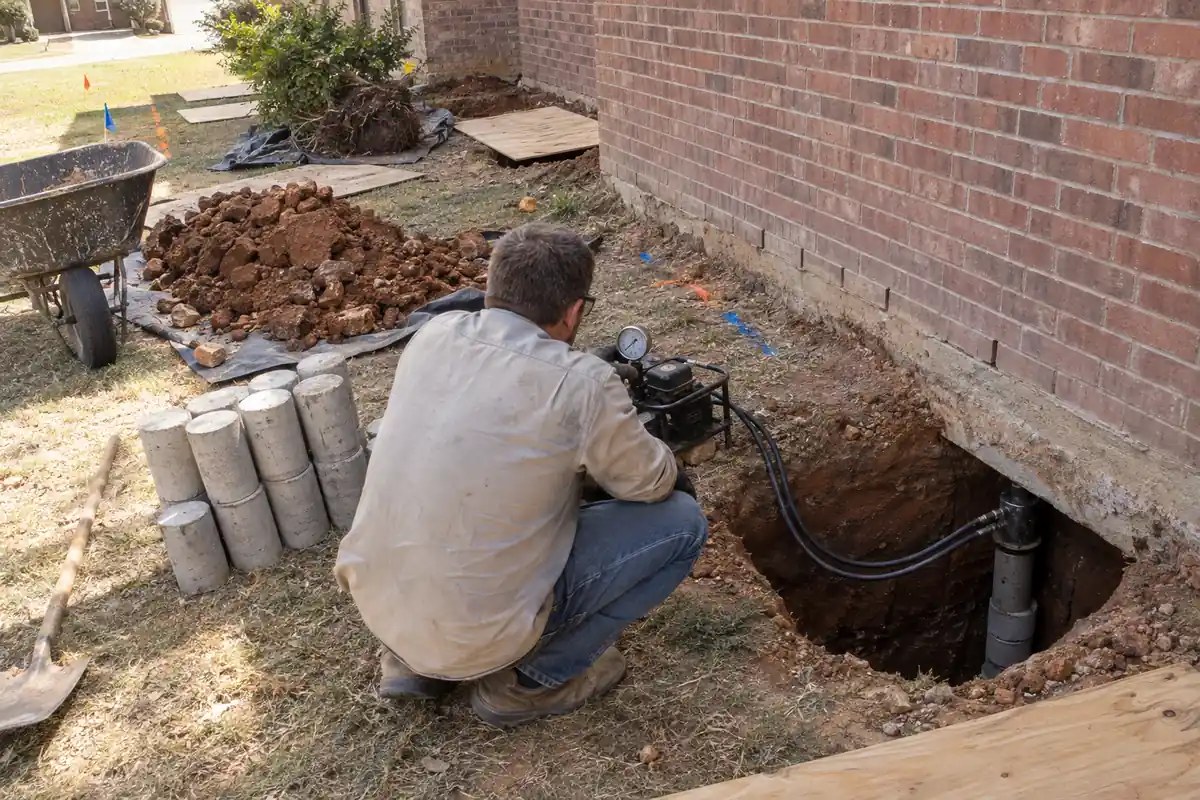
Wichita Falls Foundation Works is a foundation repair company in Wichita Falls, Texas, and we work on slab-on-grade houses, post-tension slabs and pier and beam floors. Every job starts the same way. You get a free on-site inspection with elevation readings, then a written itemized quote that's yours to take elsewhere.
Call (940) 202-0406 and tell us what the house is doing. A roof, a remodel or a new slab belongs to a specialist in that trade, and we stick to foundations. See how we quote and warranty the work before you call.
Slab repair and pressed piles
Pressed concrete cylinder piles under the perimeter grade beam are the market default on a settled slab here, and a typical single-story house takes 8 to 15 of them. In practice the elevation survey tells us which sides moved. Cracked brick only tells us that something is wrong. Read how slab repair in Wichita Falls is put together.
Pier and beam repair
On a raised house the work happens underneath, in the crawl space. No pits get dug along the outside wall. Pads and piers go back under the girders, shims go under the beams, and our crew reads interior elevations while the floor comes up. Here's what pier and beam work involves.
Foundation inspection and elevation readings
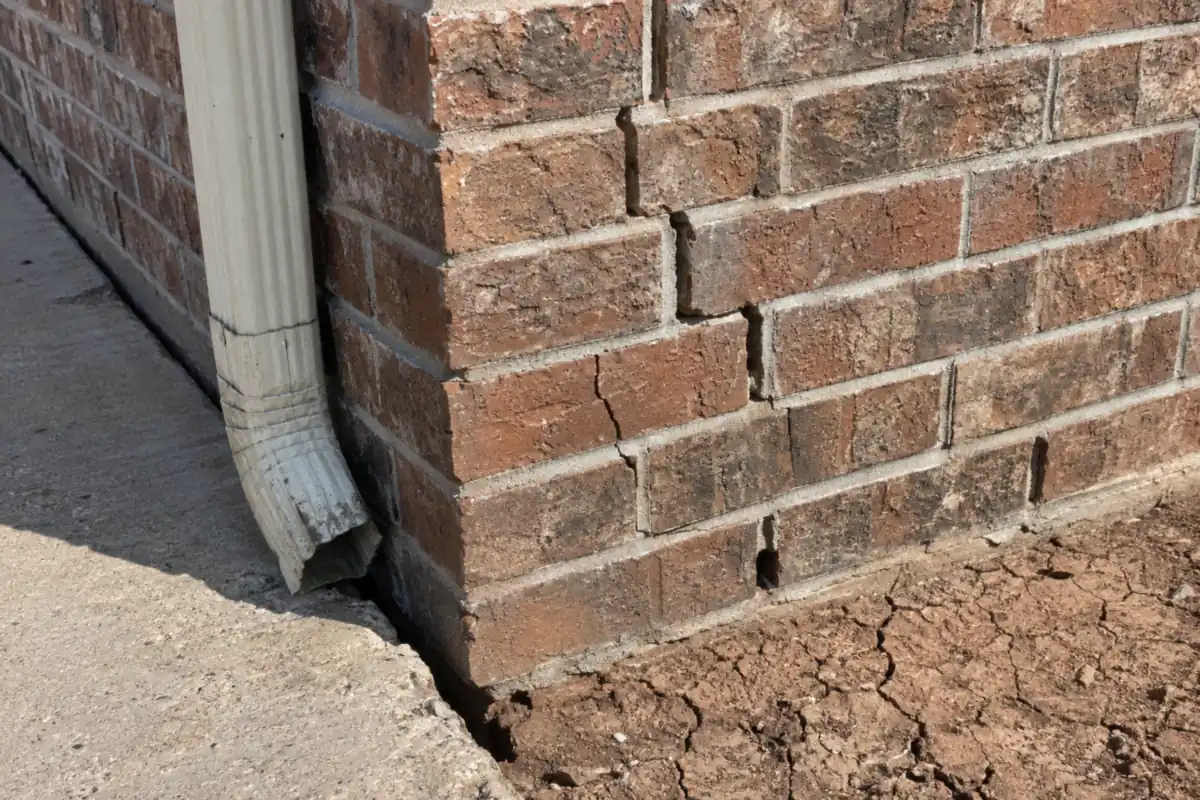
A foundation inspection here is one person, no crew, and nothing parked in your yard. Our estimator takes readings room by room with a zip level, which runs an hour and a half to two hours, and leaves you a floor diagram showing where the piles would go. Sometimes the answer is that your house does not need them yet. Book a free foundation inspection.
Drainage, grading and soil moisture
Drainage does not lift a slab that has already dropped. Once the piles are in, drainage is how we keep the moisture under the edge steady. A whole-house correction runs $1,500 to $8,000 and can take in French drains, downspout extensions, regrading, root barriers and soaker hoses. See what drainage and grading work covers.
Pressed concrete cylinder piles
Cylinders are pressed one on another under the grade beam, joined with rebar and epoxy, to the point of refusal. The weight of your house is the backstop, which is why we bring no drill rig into your drive. It is straightforward work, and we would rather you understood it before you paid for it. See how pressed concrete cylinder piles go in.
Floor leveling and shimming
Re-shimming brings a raised floor back onto the pads it already sits on, at $800 to $4,500 a job. Where those pads have sunk into the clay, a shim is a patch and new piers are the fix, and we will tell you which one your house needs. Most people call it house leveling, and the page on floor leveling and shimming walks through both.
Commercial buildings
Light commercial and mixed-use buildings on Kemp Blvd and Call Field Rd sit on the same clay as the houses behind them. But an engineer sets the pier count and the spacing on those jobs, so no price band covers them. Commercial foundation work sets out that sequence.
Every service we handle
- Concrete Pressed PilingsPressed concrete cylinder piles driven under the grade beam, the default slab method here
- Steel Push PiersSteel push piers pressed to refusal where the load or the soil calls for steel
- Helical PiersHelical piers turned into place where there is no house weight to press against
- Interior Piers and TunnelingPiers set through the slab inside the house, or from a tunnel driven underneath
- Slab Leveling and Foam InjectionPolyurethane foam and mudjacking to lift a sunk slab, patio or garage floor
- Foundation Crack RepairCracks in slabs, brick and sheetrock traced back to whatever moved them
- Floor Leveling and ShimmingShims, blocks and new pads that bring a pier and beam floor back to level
- Crawl Space RepairAccess, moisture and vapor barrier work under a pier and beam house
- Beam, Joist and Sill Plate RepairRotted joists, girders and sill plates cut out and replaced
- Foundation Elevation SurveyA zip level survey that maps how far each corner of the floor has moved
- Hydrostatic Plumbing TestStatic and hydrostatic testing that shows whether a leak under the slab is the cause
- Pre-Sale Foundation InspectionA written foundation report for a sale, a buyer or a lender
- French Drain InstallationPerforated pipe in gravel that moves standing water away from the beam
- Drainage Correction and GradingGrade, downspouts and surface drains corrected so water leaves the slab
- Root Barrier InstallationA barrier between a thirsty tree and the clay under your foundation
- Foundation Maintenance and Soil MoistureSoaker hose and soil moisture routines that keep the clay from swinging
- Commercial Foundation RepairSlabs and grade beams under shops, offices and small commercial buildings
Why the ground under Wichita Falls moves houses
In USDA soil survey data for Wichita County, Kamay clay is the soil most often mapped under the developed city, and it is native Permian red bed material rather than trucked-in fill. NRCS rates the clay high shrink-swell, with a plasticity index of 29, and a linear extensibility of 7.5 percent.
Wet, it swells. Dry, it pulls back from the grade beam and the slab edge loses its support. NOAA's 1991-2020 normal for annual rainfall is 27.89 inches, and US Drought Monitor maps put part of Wichita County in extreme drought or worse for 53 weeks of 2013 and 52 of 2014.
So ground that has shrunk through two summers does not take a downpour gently. That is the movement we measure, and putting the low side back is what a slab job involves.
How the free inspection and the written quote actually work
There are four steps to it, and your own number comes at the end of the third.
- The call. You describe what the house is doing, and we give you a scheduling window up front.
- The visit. Our estimator walks the outside first, then comes in and takes elevation readings room by room. Here is what happens at the inspection in full.
- The written itemized quote, with a floor diagram marking where the piles go. Where our readings point at a leak, an under-slab plumbing test comes first.
- The contract. Warranty terms and the scheduling window are written into it, and you read them before you sign anything.
What foundation repair costs in Wichita Falls
Compare the price per pile and the number of piles. The two bottom lines tell you very little on their own. A pressed concrete cylinder pile runs $300 to $700 installed.
A typical single-story slab job lands at $3,500 to $8,500, a full perimeter at 20 to 25 piles and $9,500 to $28,000, a raised floor at $2,000 to $12,000. That said, a few things move a quote inside those bands, and we go through all of them with you at the visit.
- how many sides moved, and how many piles that takes
- pile type, whether that is pressed concrete, steel push piers or helical piers
- depth to stable soil
- exterior pits, interior piers or a tunnel under the slab
- access around the house, which means fences, patios, flower beds and the AC pad
Call (940) 202-0406, and we'll turn one of those bands into a single number with lines under it.
| Work | Typical range | Notes |
|---|---|---|
| Slab repair, whole job | $3,500 to $8,500 per job | 8 to 15 pressed piles on the sides that moved |
| Pressed concrete cylinder pile, installed | $300 to $700 per pile | Exterior pit at the grade beam |
| Pier and beam repair, whole job | $2,000 to $12,000 per job | Re-shim at the bottom, new piers and beam work at the top |
| On-site inspection, elevation readings and written quote | Free | No charge, no obligation |
| Engineer's report, third-party Texas professional engineer | $300 to $1,000 per report | Not a service this company sells |
Swipe the table sideways to see the notes column.
Market ranges for this area, dated 2026-09-20. We price every job after a free on-site inspection and an elevation survey.
The towns we drive to, and how far out they are
The service area runs along I-44, US 287, US 277, US 281 and US 82. Burkburnett is 15.4 miles up I-44, and Iowa Park and Henrietta sit inside 20. Vernon, Bowie and Nocona are the long runs, and we drive them too.
The ground changes on the way out. Burkburnett and Bowie sit on series the soil survey rates lower shrink-swell than this city's, so we read the elevations before we assume anything about a house out there. The towns we cover are listed with the soil and the drive for each one.
What happens when you call
The inspection
A free on-site inspection comes first. We come to the property, look at the work in person, measure, and check the things that change the price before quoting anything.
A written, itemized quote
Every line item goes on paper before any work starts: prep, materials, labor, cleanup and the scheduling window. No verbal numbers.
Warranty terms in the contract
Workmanship and material warranty terms come in writing and go in your contract so you can read them before you sign.
Scheduling you can plan around
You get a start window and a working-day estimate up front, and the crew tells you before anything changes.
Who this is not for
Wichita Falls Foundation Works handles foundation repair and the related work listed on this site. It does not take on unrelated trades; if your job is outside that scope, a specialist in that trade is the right call.
Foundation questions Wichita Falls homeowners ask first
Can I get a real dollar figure for foundation repair before anyone comes to the house?
Yes, a band. Most whole slab jobs here land between $3,500 and $8,500, and a pressed concrete cylinder pile runs $300 to $700 installed.
What we cannot tell you over the phone is how many piles your own house takes. The inspection and the elevation survey turn that band into one written number.
What are the first things that tell a Wichita Falls homeowner the foundation has moved?
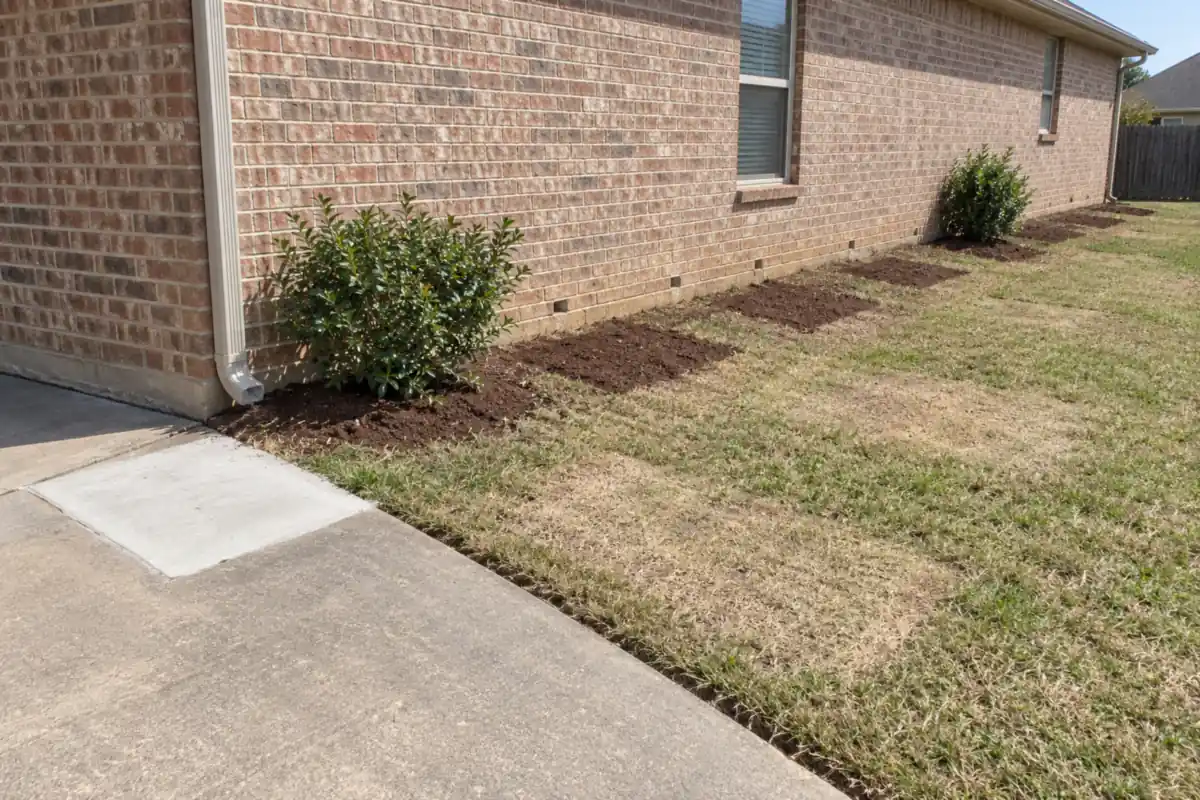
Stair-step cracks climbing the mortar joints of the brick are usually the first thing people notice. Then a door that sticks or will not latch, with a gap over the frame. Windows that bind, cracked sheetrock at the corners, floors that slope.
One sign is worth a look. Three together is worth measuring, and that is when we would come out.
Why do so many houses in this part of North Texas end up needing foundation work?
Expansive clay does it, worked on by the weather. The clay swells when it is wet and pulls back from the grade beam when it dries.
NOAA's rainfall normals swing from 3.81 inches in May to 2.02 in July, so the ground under your slab moves twice a year, every year.
Is there a better or worse season to have the work done around here?
No. Piles can go in any month, and rain is the only thing that stops the work. The season changes the digging. The price stays where it is.
Waiting out a dry summer usually means more movement, and the US Drought Monitor shows Wichita County with 7 weeks at extreme drought or worse in 2026, through September 20.
Two companies quoted my house and the numbers are nothing alike, so what do I compare?
Read both quotes line by line. Check pile type, how many piles and where they go, exterior pits against interior piers or a tunnel, and whether the elevation survey and a plumbing test sit inside the price.
Texas does not license this trade; the state licensing agency, TDLR, has no program for it. The City of Wichita Falls licenses and registers contractors and requires a permit before repair or alteration work starts; ask to see both, plus proof of general liability insurance and the warranty transfer terms.
Is the free inspection actually free, or does it turn into a bill?
Free, and no obligation after it. The visit, the readings and the written itemized quote cost you nothing.
What costs money is third-party work a lender or a buyer may want. An engineer's report runs $300 to $1,000, and a plumbing test runs $250 to $600.
What warranty comes with the work, and does it pass to whoever buys the house next?
The terms are in the contract before anything starts. It names the duration, what transfers to the next owner, what the transfer costs, the deadline to file, and what voids it.
You read all five of those before you sign.
What happens if the house moves again after the piles are in?
The written warranty says what a return visit covers and what it costs, which is why the transfer terms matter more than the headline promise.
Clay keeps moving whatever we do to the house, so we quote drainage alongside the piles.
Will homeowners insurance in Texas pay for any of this?
Settling and soil movement are generally excluded. The exception most policies contemplate is a sudden accidental discharge of water, which is why the under-slab test comes before anyone prices piers.
Read the policy and ask your carrier before you assume either way. We don't file claims for you.
Do you offer payment plans or financing?
No. This site advertises no finance product, no rate, no term and no lender.
What we do put in writing is the payment schedule, in full, inside the itemized quote and before work starts. Anything beyond that you agree with our estimator at the inspection.
We are thinking of selling, so does foundation work help us or hurt us at closing?
The paperwork decides it more than the repair does. The Texas seller's disclosure notice asks about the foundation and slab by name, about soil movement and drainage, about previous structural repair, and whether it was done without a permit.
A written quote and a warranty with its transfer terms are what answer a buyer, and we hand you both.
What does the yard look like on the day the crew drives away?
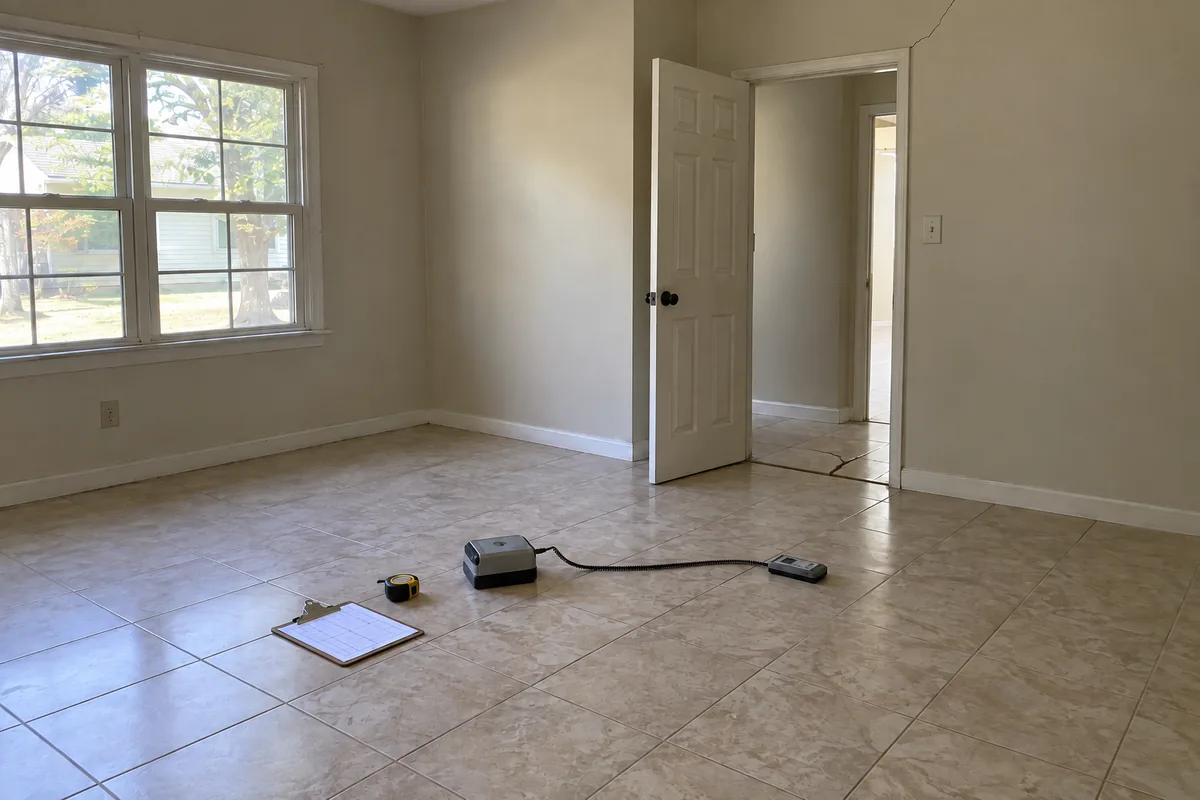
Rougher than you would like for a few weeks. A line of disturbed squares of fresh topsoil along the wall, flattened grass where the plywood lay, replanted shrubs sitting slightly proud, and fresh concrete where a walk had to be cut.
As the grass closes over the squares, most of it stops showing.
The readings come before the decision. Get them taken, get the price in writing, and then decide whether to do the work now, in the spring, or not at all.
Call (940) 202-0406 or send the form, and our estimator brings the zip level to you. Mention where the cracks are on the call, and the visit starts there.
Get a written quote
Call (940) 202-0406 or send the form. The next step is a free on-site inspection and a written quote with every line item before any work starts.
Call (940) 202-0406