
Helical Piers in Wichita Falls, TX: Turned to Torque Where There Is No Weight to Press Against
A steel shaft with spiral plates, turned into the clay to a set torque, for your addition, porch or light framed section.
- Free on-site inspection
- Elevation survey before we quote
- Written itemized quote
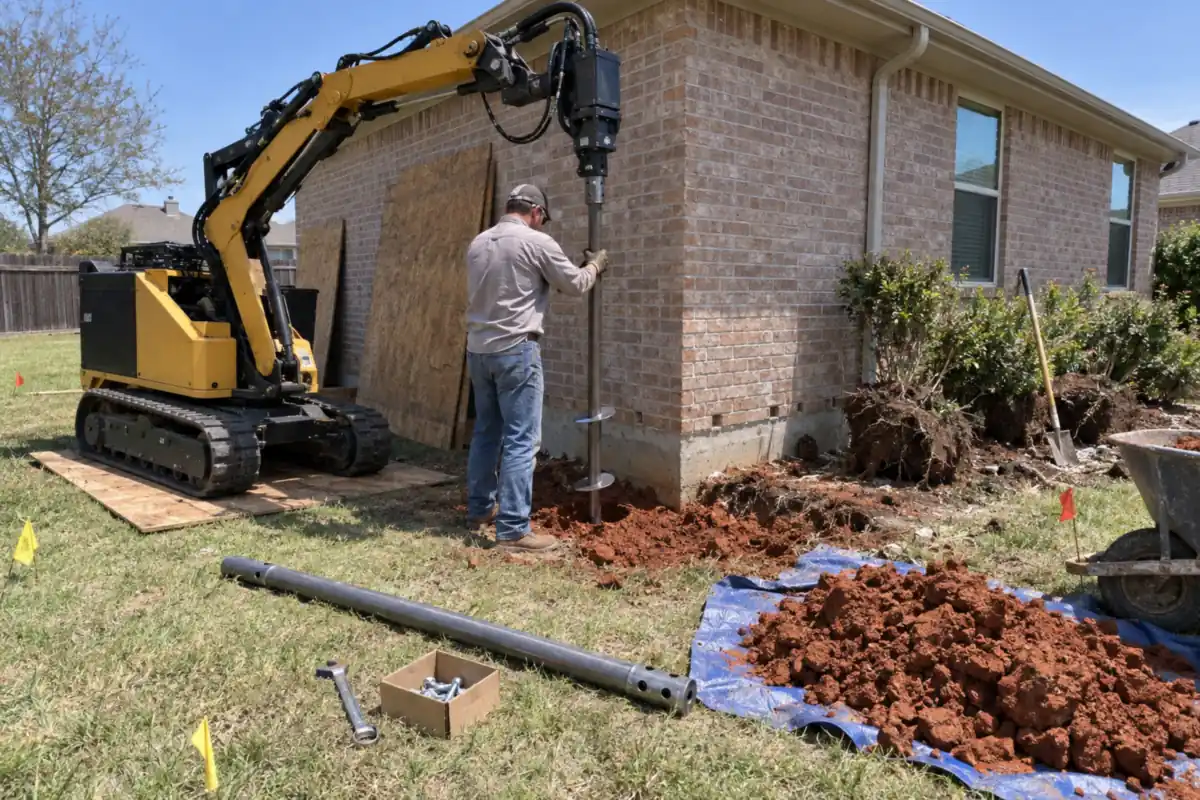
Wichita Falls Foundation Works turns helical piers into the clay under additions, porches and light framed sections across Wichita Falls and Wichita County. You get the per-pier price on a written quote after a free on-site inspection, and the reason we chose this method over the other two sits right beside it.
Call (940) 202-0406 before you assume a light structure needs the most expensive pier on this site. Sometimes it does. More often a cheaper pile does the same job, and we'll tell you which one you are looking at.
What a helical pier job includes
The scope runs in order. We take elevation readings, write an itemized quote marking each pier, clear access for the drive head, turn the lead shaft in with extensions added, reach target torque, set the bracket and lift.
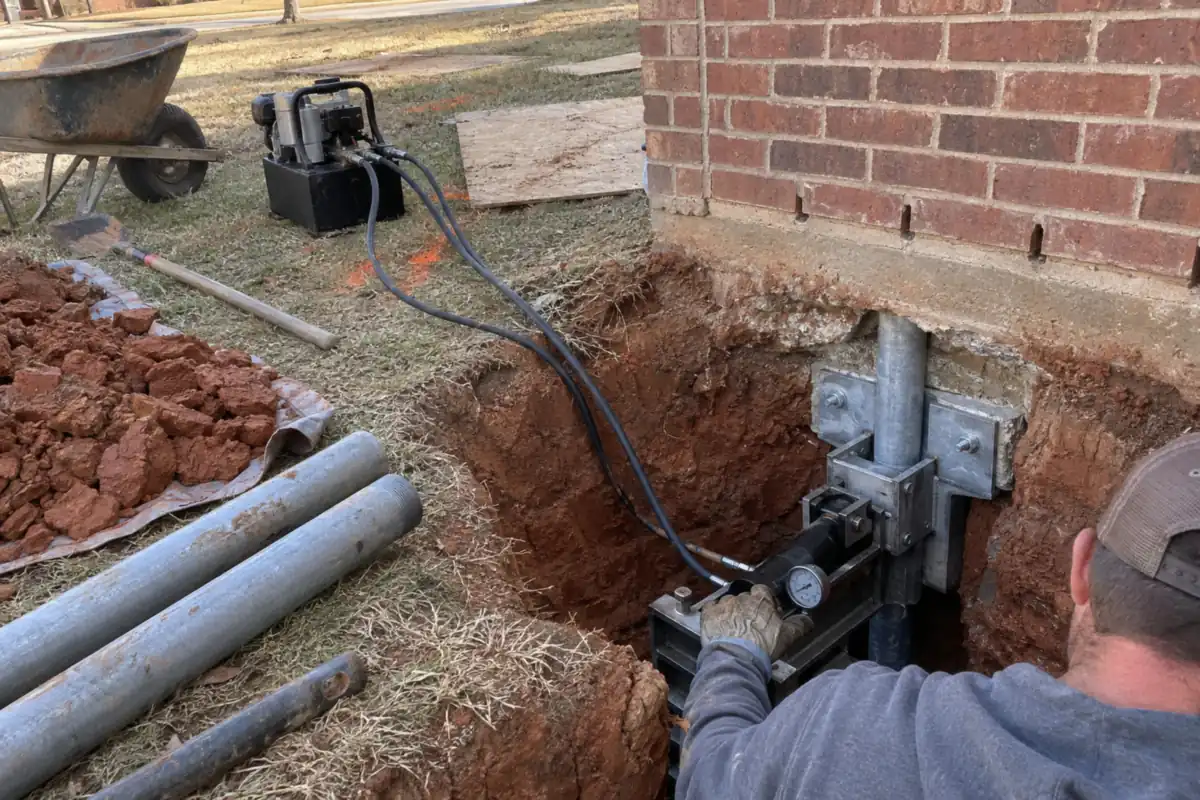
What goes in the ground is a lead shaft with one or more spiral plates welded near the tip, plus plain extension shafts bolted on as it advances. Our hydraulic drive head, hand held or hung off a machine arm, turns the shaft roughly three inches per revolution. This work sits inside slab foundation repair alongside the other pile types.
An engineer's sealed design, a plumber's leak test and cosmetic finishing after the lift are quoted separately.
What you get in writing before the drive head turns
Four commitments come in writing on every helical job. You get a free on-site inspection first, then a written itemized quote broken into separate lines.
We set a scheduling window up front, and the warranty terms are written down too, transfer language spelled out. That means you read what passes to the next owner, what a transfer costs and what voids it. Either way, Wichita Falls and Wichita County get the same paperwork.
Where light structures drop away in Wichita Falls
An addition rarely fails the way the main house does. It sits on a separate, lighter footing, and it never carried the weight the original slab was built on.
- An addition or sunroom settling away from the main house.
- A seam opening at the ceiling where an addition meets the old roofline.
- A porch, stoop or carport column that has gone down on one side.
- A garage corner low on a light framed section.
- A deck or covered patio pulling off the wall.
- A doorway into an addition that will not latch while every other door in the house does.
A light structure does not weigh enough to press a pile against. That is exactly the condition a turned-in pier is for, and it is the first thing we check when you call about an addition.
What Wichita Falls homeowners get from Wichita Falls Foundation Works
A helical is the right answer where there is no load to press against, or where a pressed pile cannot reach refusal at all. Everywhere else the cheaper pile is the honest recommendation. Each pier should reach its target torque; ask to see the reading for every one.
The required capacity can be engineer-specified. Texas licenses the professional engineer through TBPELS, and not the repair crew, so that report is a separate paid service and our quote says whether it is included or billed on top. Access for the drive head matters too. A tight side yard, a fence line or a low soffit changes the equipment and sometimes the method.
The City of Wichita Falls licenses and registers contractors and requires a permit before repair or alteration work starts; ask any bidder to see both, along with proof of general liability insurance and the written warranty with its transfer terms.
Helical piers compared with pressed pilings and steel push piers
Helical piers. We turn these to installation torque. They cost the most per unit of the three, and they go in where nothing else applies.
Pressed concrete pilings. These cost less per unit, and they work only where house weight exists to press against.
Steel push piers. These get driven and load tested, and we use them where refusal sits deep or the load is heavier than a light structure carries.
The elevation survey is what decides which of the three actually fits your house.
How the job runs, elevation survey to torque
- Free on-site inspection and elevation survey: our estimator reads inside and out, then leaves you a written estimate with a floor plan marking every proposed pier.
- Setup and access: utility locates marked, your sprinklers off, plywood stood against the wall where the machine arm swings.
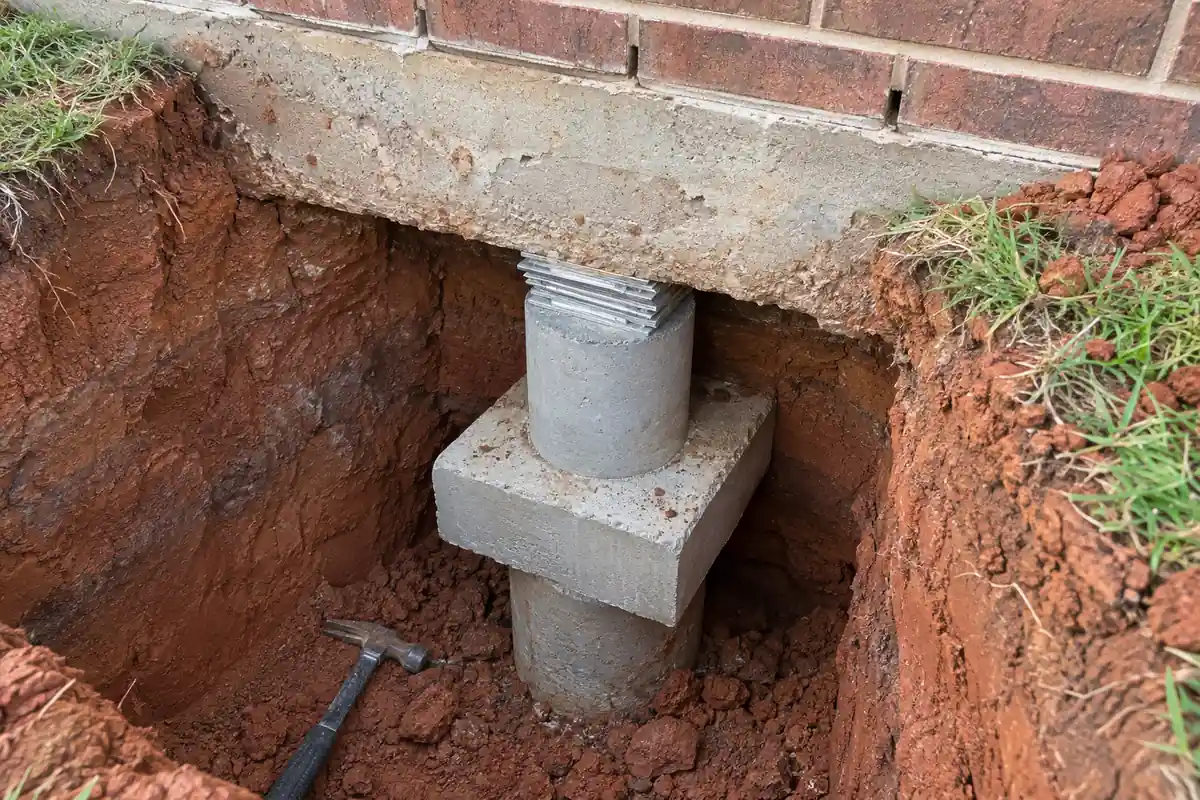
- Excavation at the bearing point, hand dug by our crew, so the bracket can meet the footing or the beam.
- Turning in: the lead with its spiral plates advances by the drive head, extensions coupled on, to depth and to target torque. On a house that can run roughly 25 to 30 feet, going by depths North Texas repair companies publish, never promised as a fixed number for your lot.
- Bracket and lift: the bracket set, hydraulics at each pier, the structure brought up in sections while one of our crew reads elevations inside.
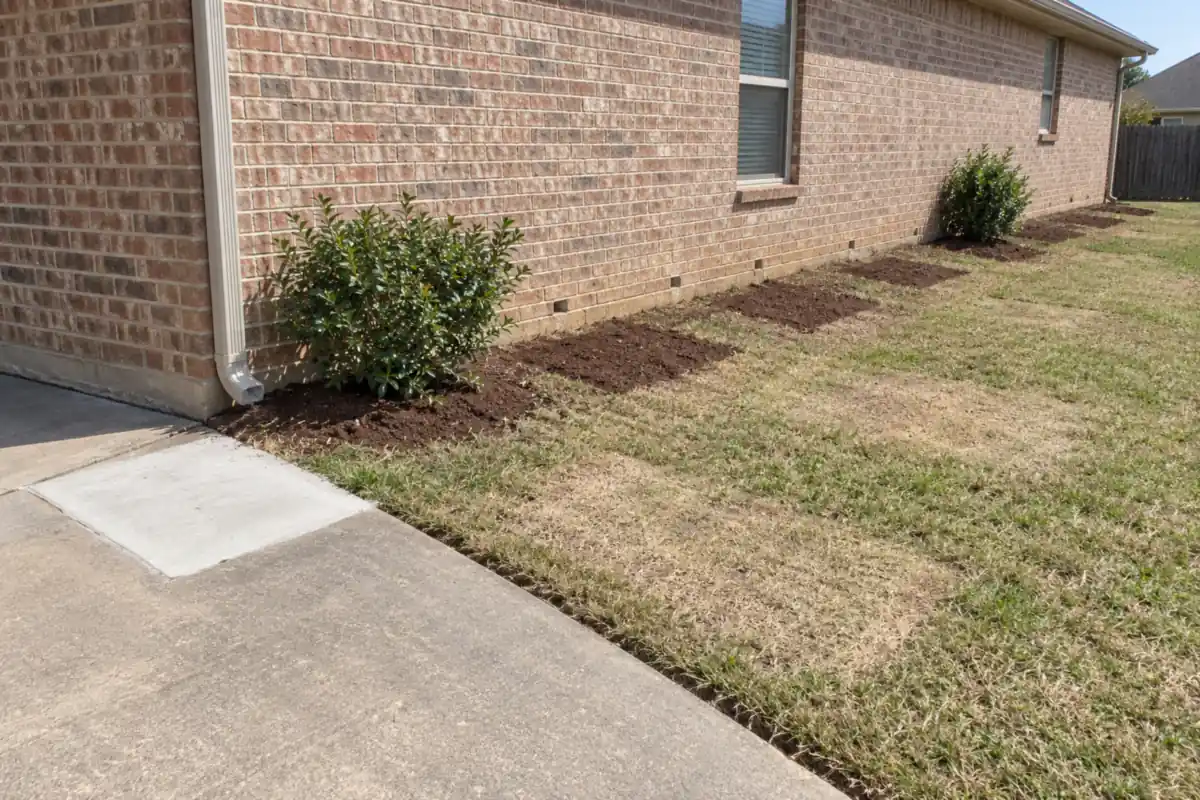
- Backfill and cleanup: holes packed with select fill and tamped, plywood lifted, and we haul the spoil away and wash the drive.
What Wichita County ground does to a turned-in pile
In USDA soil survey data for Wichita County, the largest soil map units are Kamay silt loam at over 50,000 acres and Tillman clay loam at over 41,000, followed by Bluegrove loam. NRCS records Kamay as slow permeability and Tillman as slow with medium to high runoff, both well drained on the surface but slow to let water through underneath.
Texas regulates the professional engineer through the Texas Board of Professional Engineers and Land Surveyors, and only a person that board has registered may lawfully perform engineering services for the public. The City of Wichita Falls itself does not require a Texas professional engineer's seal on the construction documents for a one- or two-family dwelling permit, whatever the size of the house, though the building official can still require one where a submittal amounts to the practice of engineering.
How much do helical piers cost in Wichita Falls?
Helicals run $900 to $1,800 per pier installed, the highest of the three methods on this site. Shaft size, helix plate count, torque and depth set your number inside the band.
Where an engineer specifies the capacity, you buy that report separately from a Texas professional engineer, typically $300 to $1,000, and we do not sell it. Call (940) 202-0406 and we'll come read your floors, then tell you whether your house even needs the most expensive pier on the list.
| Work | Typical range | Notes |
|---|---|---|
| Helical piers (screw piles) | $900 to $1,800 per pier installed | Used where a pressed pile cannot reach refusal or a light structure will not take a driven pile. Shaft size, helix plate count, torque and bracket type move the number. |
| Engineer's report (third-party Texas professional engineer) | $300 to $1,000 per report | NOT a service this company sells. A site visit plus a written report with elevation readings and repair recommendations, bought from a Texas professional engineer. |
Swipe the table sideways to see the notes column.
Typical quotes for Wichita County. The on-site inspection and the elevation survey cost you nothing.
Helical pier work across Wichita County
Helical pier work runs across the county, listed on our service areas page. Our crews drive to Burkburnett, Archer City and Vernon on the same terms as a Wichita Falls address.
What happens when you call
The inspection
A free on-site inspection comes first. We come to the property, look at the work in person, measure, and check the things that change the price before quoting anything.
A written, itemized quote
Every line item goes on paper before any work starts: prep, materials, labor, cleanup and the scheduling window. No verbal numbers.
Warranty terms in the contract
Workmanship and material warranty terms come in writing and go in your contract so you can read them before you sign.
Scheduling you can plan around
You get a start window and a working-day estimate up front, and the crew tells you before anything changes.
Who this is not for
Wichita Falls Foundation Works handles foundation repair and the related work listed on this site. It does not take on unrelated trades; if your job is outside that scope, a specialist in that trade is the right call.
Helical pier questions from Wichita Falls homeowners
What is a helical pier, and how is it different from a driven pile?
A helical pier is a steel shaft with helix plates, screwed into the ground by a hydraulic drive head until it reaches a set torque. It does not need the weight of the house to push against, the way a pressed or push pile does. One installer's own description is a giant power-driven screwdriver.
When would my house need helicals rather than pressed or steel piles?
Where a pressed pile cannot reach refusal, or the structure is too light to press against at all. That is usually an addition, a porch, a light framed section, or new construction going in before the load exists. If neither describes your house, see pressed concrete pilings instead.
What does a helical pier cost, per pier installed?
Helicals run $900 to $1,800 per pier installed, the highest per unit of the three. Shaft size, helix plate count, torque and depth are what move it inside the band. We put the pier count and the per-pier figure on the written quote before anyone turns a shaft.
Does a helical pier have to be specified by an engineer?
Sometimes, when the required capacity is engineer-specified. That report is a separate paid service from a Texas professional engineer, not something a repair crew signs off. Ask any quote, ours included, to say whether the report is included or billed on top.
Can helicals go in where there is no room for a machine?
Access for the drive head is a real constraint, and it is one of the price factors. A tight side yard, a fence line or a patio in the way changes the equipment, sometimes the method, and always the number on the quote. We measure the access at the inspection.
Are helicals only for repairs, or do they go in on new construction too?
Both. The bracket is different for a new build than for an add-on to an existing footing, and that is one more thing that moves the per-pier price. Tell us which one you have when you call and we'll quote the right bracket.
Helicals are the answer for a light structure with no weight to press against. Everywhere else they are an expensive way to do a pressed pile's job. The elevation survey and the access at your house decide which case you are in. Call (940) 202-0406 and we'll come look before anyone quotes the priciest pier on this site.
Get a written quote
Call (940) 202-0406 or send the form. The next step is a free on-site inspection and a written quote with every line item before any work starts.
Call (940) 202-0406