
Concrete Pressed Pilings in Wichita Falls, TX: Priced Per Pile After a Free Inspection
Pressed concrete cylinder piles go in from a hand-dug pit at the grade beam, and you see the per-pile price in writing before we dig.
- Free on-site inspection
- Elevation survey before we quote a price
- Written itemized quote
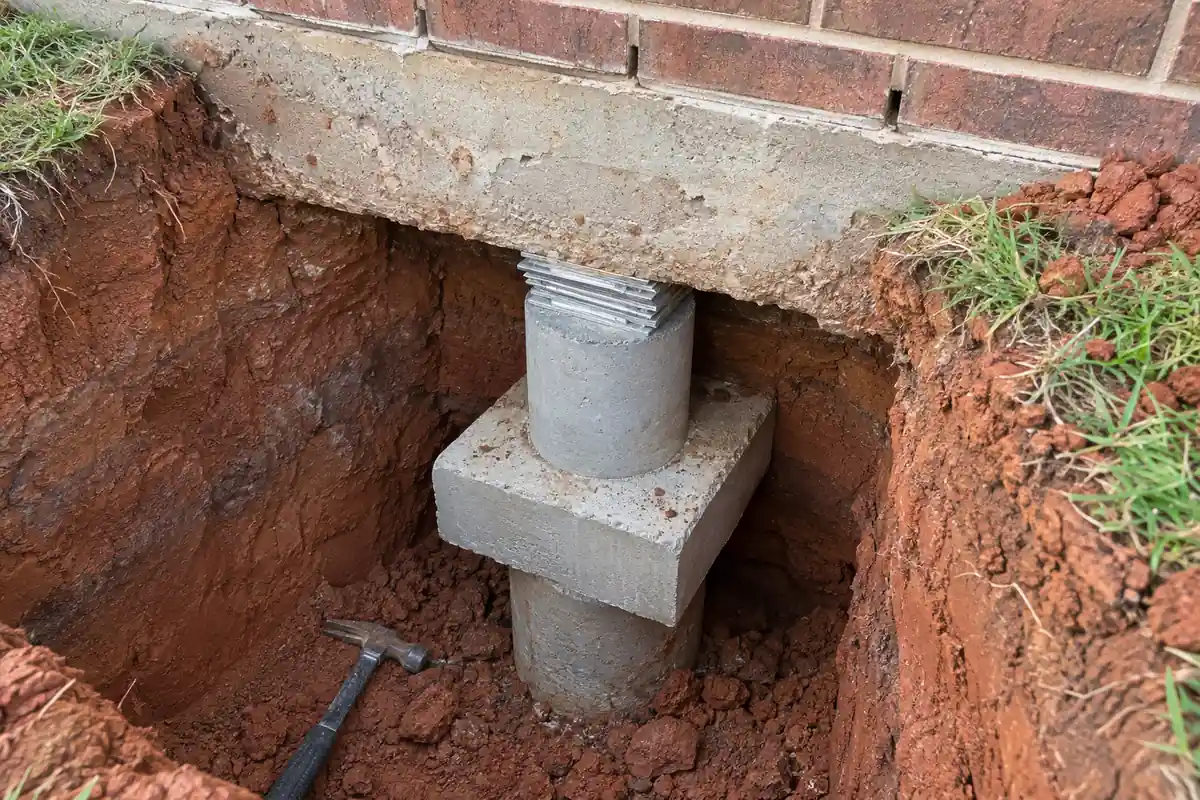
Wichita Falls Foundation Works presses concrete cylinder piles under settled slabs across Wichita Falls, Burkburnett and Iowa Park, priced per pile on a written quote. Every quote follows a free on-site inspection and an elevation survey of your floors, so the pile count on the paper is the pile count on the invoice.
Call (940) 202-0406 and we'll get that inspection on your calendar, or keep reading for what one pile actually costs. We don't guess at a lump sum and call it a quote.
What a pressed concrete piling job includes
Elevation readings come first, inside and out, then you get a written itemized quote with every pile marked on a floor plan before anyone digs. Our crew opens hand-dug pits at the grade beam, and a hydraulic ram presses precast concrete cylinders down to refusal. Pressed pilings sit inside slab foundation repair alongside the other two pile types.
A plumber's leak test, cosmetic sheetrock and tile work after the lift, and an engineer's report from a Texas professional engineer are not in this price. Those get billed separately.
What you get in writing before a shovel moves
Every job here carries the same commitments in writing. You get a free on-site inspection, then a written itemized quote with materials, labor and cleanup on separate lines.
We set the scheduling window before our crew shows up, and the warranty terms come in writing, transfer language spelled out. Either way, you read what passes to the next owner, what a transfer costs and what voids it. Wichita Falls and Wichita County get the same paperwork.
Signs of slab settlement Wichita Falls homeowners call about
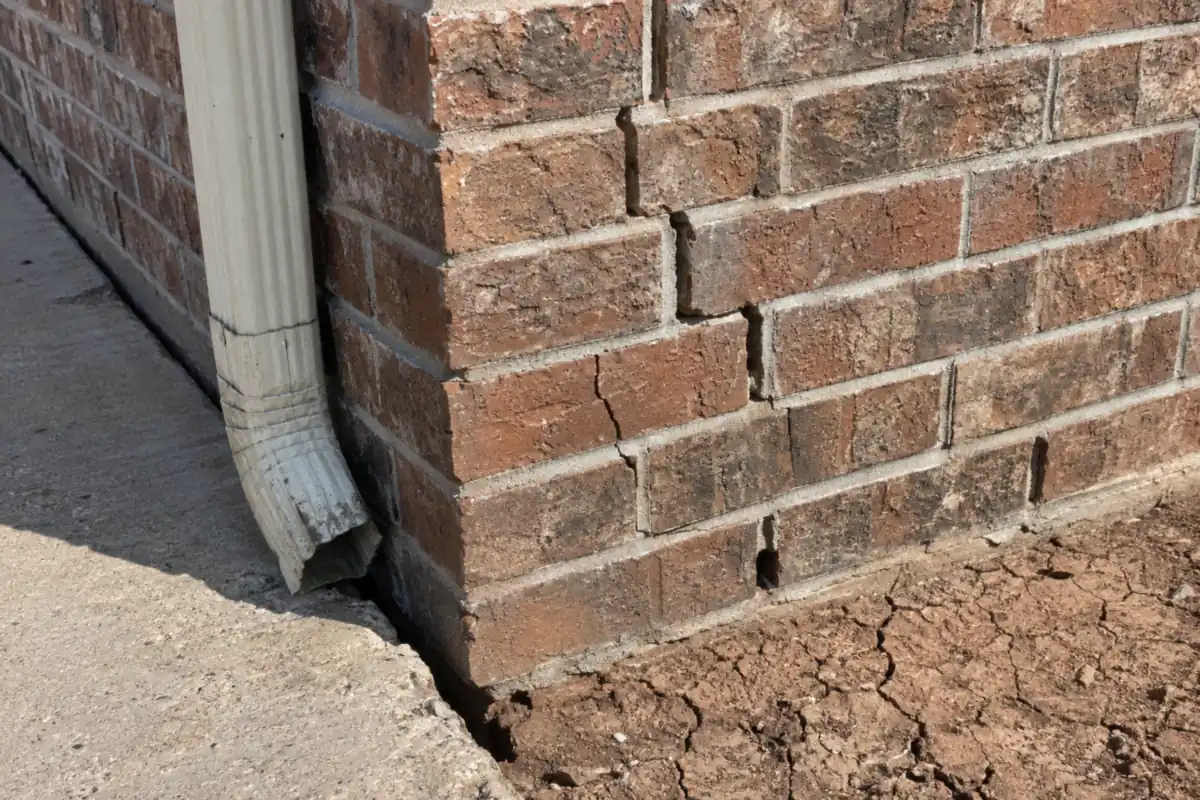
A stair-step crack climbing the mortar joints is usually the first thing anyone notices, and the trade name for it is differential settlement along a slab-on-grade.
- Stair-step cracks climbing the mortar joints of the brick veneer.
- A front door that sticks or will not latch, with daylight at the top corner.
- Gaps opening above interior door frames.
- Cracked sheetrock running out from the corners of doors and windows.
- Separation at the cornice or fascia where the veneer has dropped.
- A gap opening between the slab edge and the driveway or porch.
None of that tells you how deep the movement runs, or whether a plumbing leak is feeding it. That is what we come out to find.
What Wichita Falls homeowners get from Wichita Falls Foundation Works
The choice between pressed concrete, steel and helical comes down to three things: whether the cylinders reach refusal, what the corner being lifted carries, and whether there is house weight to press against at all. Our estimator answers the first question with an elevation survey before we price a single pile.
Texas licenses no foundation repair contractor. The City of Wichita Falls licenses and registers contractors and requires a permit before repair or alteration work starts; ask to see both, along with proof of general liability insurance, the written warranty with its transfer terms, and whether an engineer's report is included or billed separately.
Field judgment governs the lift. But a house rarely comes back perfectly level. We say closer, because closer is the honest word for what a line of piles does.
Pressed pilings compared with steel push piers and helical piers
Pressed concrete cylinders. These carry the lowest per-pile price of the three. But nothing holds the stack straight the way a drilled shaft would.
Steel push piers. These drive through a bracket bolted to the footing, and we use them where refusal sits deeper or the load is heavier.
Helical piers. These turn to a set torque, so they still hold where a structure is too light to press against at all.
Some houses go down through the middle, away from any outside wall. Interior piers and tunneling reach a low point there, and your readings will say so.
How the job runs, elevation survey to backfill
- Free inspection: our estimator reads elevations room by room with a zip level or a laser, and leaves you a written estimate with a floor plan marking every pile.
- Setup: utility locates painted on the lawn, your sprinklers off so the clay is not saturated, cars off the driveway, plywood down, tarps ready for spoil.
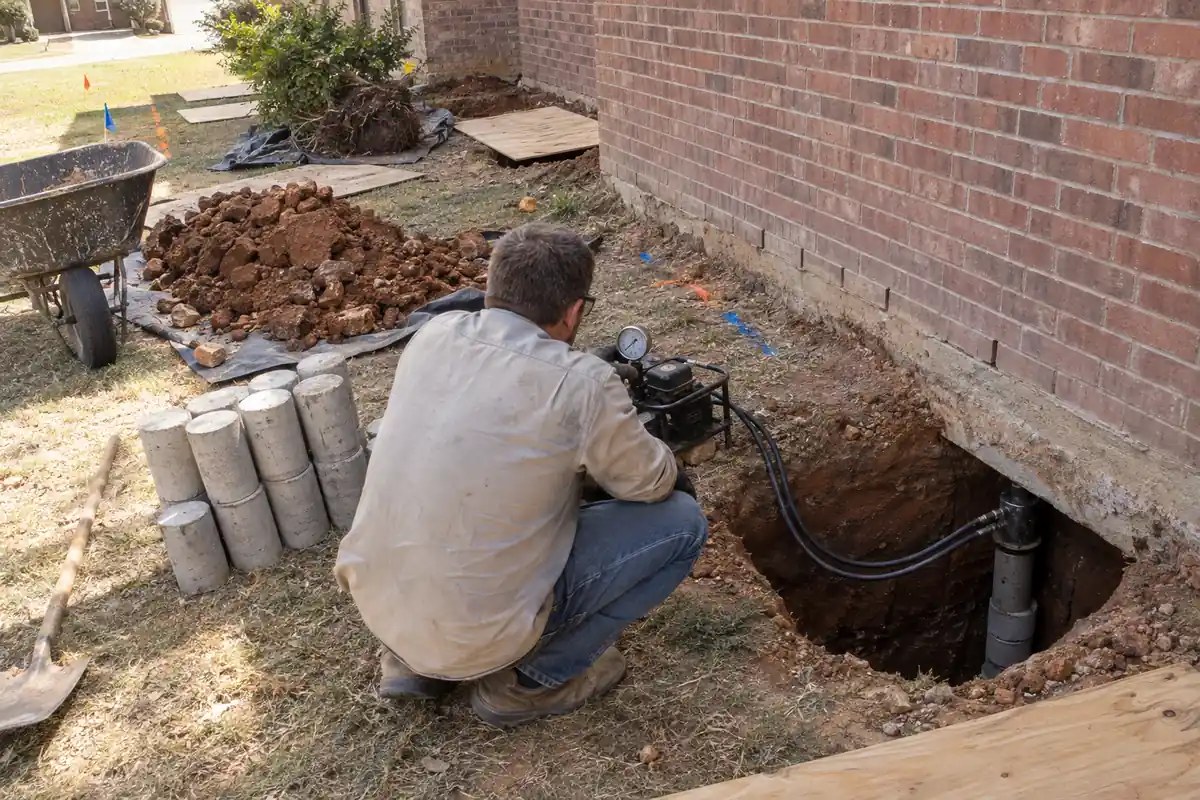
- Pits go in by hand, roughly two feet square at the surface and three to five feet deep, cut back under the grade beam.
- A cylinder sits at the bottom, and a 40-ton ram between the beam and the cylinder presses the stack to refusal, usually 18 to 20 tons on the gauge.
- The lift: bottle jacks sit on every pile cap while the house rises in sections, and one of our crew stays inside, boots off, watching your doors and the readings.
- Shims go in tight under the beam, on a precast cap and a short cylinder, until the gap closes.
- Backfill and cleanup: select fill tamped in, topsoil over that, any cut driveway patched, and we haul the spoil off.
Why Wichita Falls clay decides where a pile stops
USDA soil survey data map most of the built-up city as Urban land complexes, and Kamay is the soil turning up most often, ahead of Winters, Bluegrove and Deandale. Kamay's clay subsoil runs high on the shrink-swell scale, a plasticity index of 29 and a linear extensibility of 7.5 percent.
In NOAA's 1991-2020 climate normals, rain here peaks near 3.8 inches in May, drops to about 2 inches by July, and climbs again come September. So the clay under your slab dries back hard and takes water on again. The city's code requires a permit to repair or alter a structure, and its published exemption list does not name foundation work.
We cannot price the depth in advance. Our ram finds refusal in reddish clay that goes sticky wet and hard as brick dry.
How much do concrete pilings cost in Wichita Falls?
A single pressed piling runs $300 to $700 installed, exterior pit included, and a typical job takes 8 to 15 of them. A full slab job across every affected side lands between $3,500 and $8,500. That whole-job band gets quoted on its own, and we never reach it by multiplying the per-pile price.
Depth to stable clay, how many sides moved, and whether a pit cuts through a drive or walk (at $75 to $125 per hole) all move the number. Call (940) 202-0406 and we'll come read your floors and turn that range into your number.
| Work | Typical range | Notes |
|---|---|---|
| Concrete pressed pilings (pressed concrete cylinder piles) | $300 to $700 per pile installed | Exterior pit at the grade beam. 8 to 15 piles on a typical job. Flatwork to cut through runs $75 to $125 per hole. |
| Slab foundation repair, whole job, pressed concrete pilings on the affected sides | $3,500 to $8,500 per job | A typical single-story house takes 8 to 15 piles at roughly every 6 to 8 feet along the affected sides. A full perimeter on a larger house runs 20 to 25 piles and $9,500 to $28,000. |
Swipe the table sideways to see the notes column.
Typical quotes for Wichita County. The on-site inspection and the elevation survey cost you nothing.
Pressed piling work across Wichita County
Pressed piling work runs across the county, listed on our service areas page. Our crews go out to foundation repair in Burkburnett, foundation repair in Iowa Park and foundation repair in Holliday on the same terms as a Wichita Falls address.
What happens when you call
The inspection
A free on-site inspection comes first. We come to the property, look at the work in person, measure, and check the things that change the price before quoting anything.
A written, itemized quote
Every line item goes on paper before any work starts: prep, materials, labor, cleanup and the scheduling window. No verbal numbers.
Warranty terms in the contract
Workmanship and material warranty terms come in writing and go in your contract so you can read them before you sign.
Scheduling you can plan around
You get a start window and a working-day estimate up front, and the crew tells you before anything changes.
Who this is not for
Wichita Falls Foundation Works handles foundation repair and the related work listed on this site. It does not take on unrelated trades; if your job is outside that scope, a specialist in that trade is the right call.
Pressed concrete piling questions from Wichita Falls homeowners
What exactly is a pressed concrete piling, and how does it go in?
A pressed concrete piling is a stack of short precast cylinders, six inches across and a foot tall, driven one on another into a hand-dug pit under the grade beam. Our 40-ton hydraulic ram presses them down, using the weight of your house as the backstop, and pressing stops at refusal.
What does one pressed piling cost installed?
One pile runs $300 to $700 installed from an exterior pit, and a typical job takes 8 to 15 of them. Cutting a pit through a drive, porch or walk adds $75 to $125 per hole. See what a whole slab job costs once we add up every side.
How deep do the cylinders go before pressing stops?
They stop at refusal, which we read off the gauge at roughly 18 to 20 tons. We will not promise a depth in feet beforehand, since nobody publishes an active-zone depth for Wichita Falls clay. Our crew finds it on the day the pit is open.
Why does nearly every company here quote this method first?
Price and access, mostly. It carries the lowest per-pile cost of the three, goes in from outside without opening your floor, and an exterior-only job usually wraps in a day or two. One North Texas contractor calls it the standard method here. Whether it suits your house is a separate question.
Can a pressed pile go in crooked, and would anyone ever know?
Yes. Nothing holds the stack in line the way a drilled shaft would, so a buried rock can push it off vertical where nobody sees it. What catches that is the refusal pressure we read on every pile and the interior readings we take during the lift. Ask any bidder what refusal number they stop at.
What happens to the driveway, walk or patio a pit has to go through?
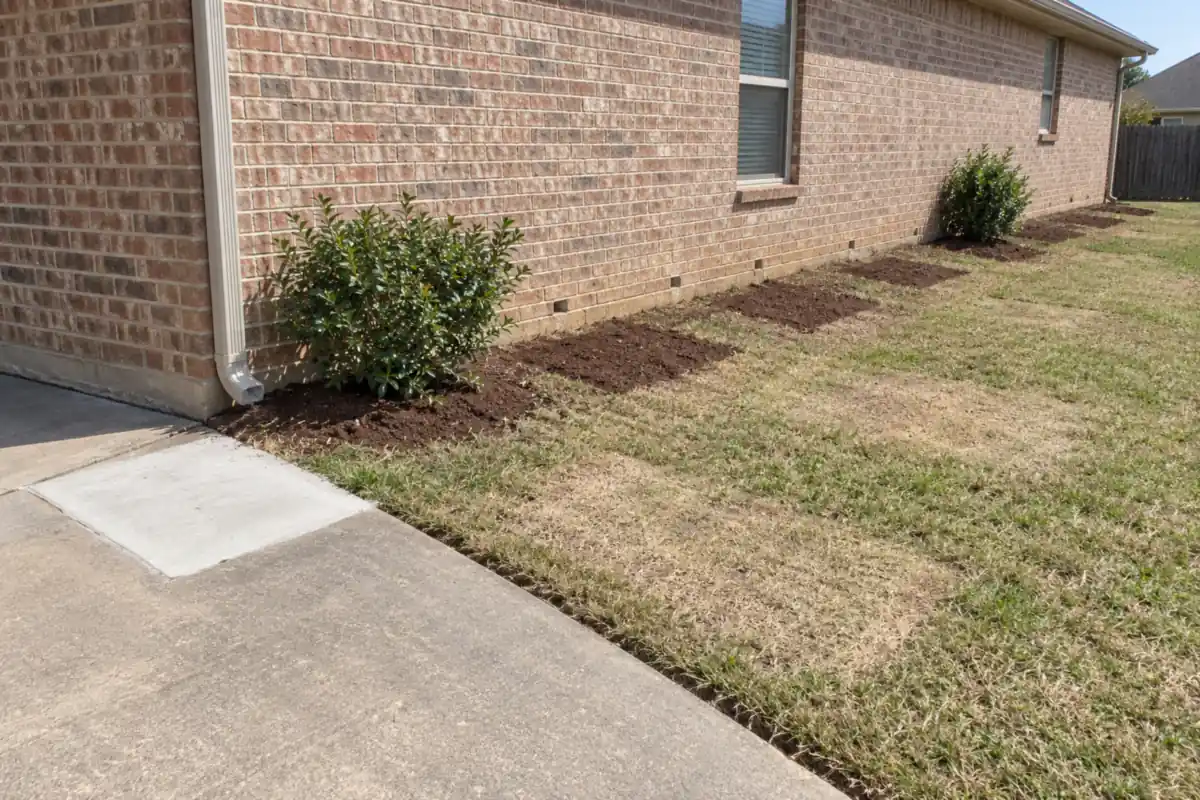
We cut the concrete, dig the pit through it, and patch the hole once the pile is set. What you see afterward is a clean rectangle of new concrete. Your quote carries that cutting and patching on its own line, at $75 to $125 per hole.
How many days will the crew be in the yard?
One to two days for a small perimeter job and two to three for a typical slab, by the timelines North Texas repair companies publish. Interior breakouts or tunneling push that to four or five days. Rain stops the work outright, and we'll tell you when it does.
A pressed pile is cheap, fast and honest work when the ground under it actually reaches refusal. Where it does not, steel or a helical is the better buy, and the gauge on the ram tells us which one you have. Call (940) 202-0406 and we'll read your floors for nothing, then put a real pile count and a real number in front of you.
Get a written quote
Call (940) 202-0406 or send the form. The next step is a free on-site inspection and a written quote with every line item before any work starts.
Call (940) 202-0406