
Steel Push Piers in Wichita Falls, TX: Driven to Refusal and Load Tested, Priced Per Pier
Galvanized steel pipe driven to refusal through a bolted bracket, and every pier should be load tested before your house comes up.
- Free on-site inspection
- Elevation survey before we quote
- Written itemized quote
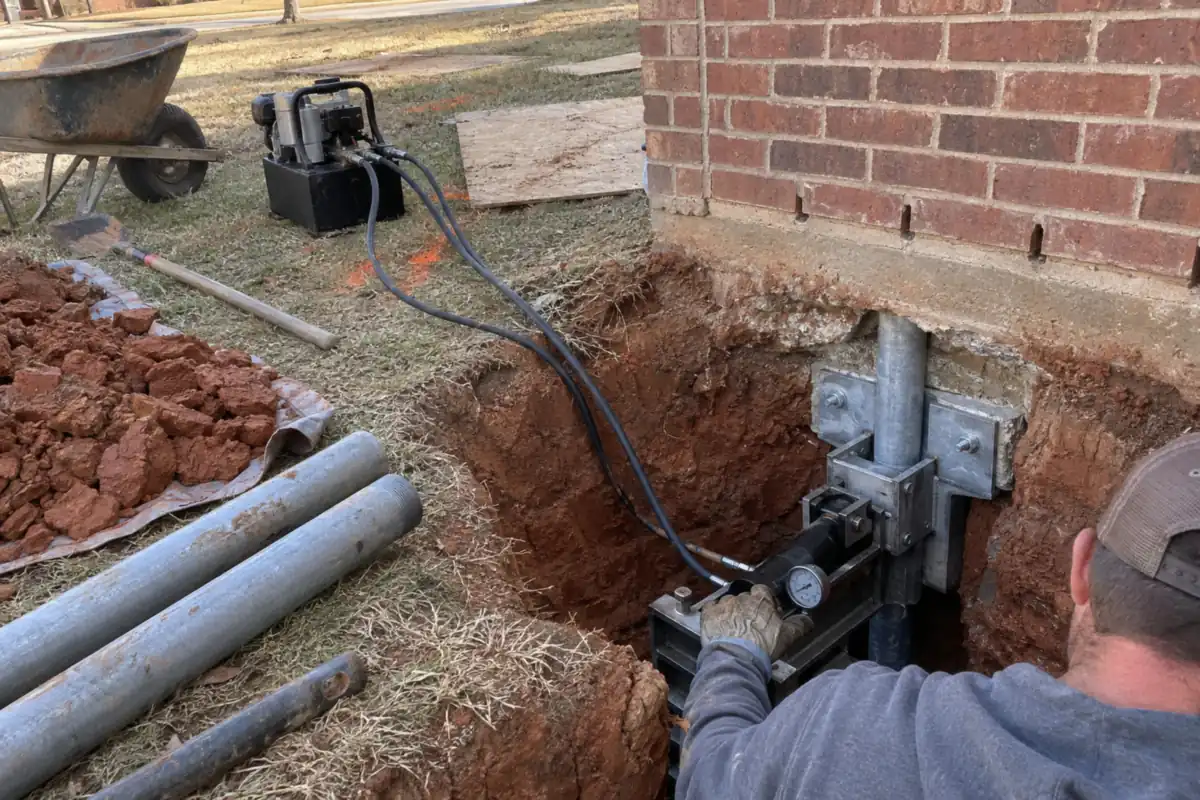
Wichita Falls Foundation Works drives steel push piers under footings and grade beams in Wichita Falls and Wichita County, wherever a pressed concrete pile will not reach stable ground. You get a price for each pier on a separate line, after a free on-site inspection and an elevation survey, so our quote sits beside anyone else's.
Call (940) 202-0406 and we'll get that survey on the books. A heavier corner deserves a pier somebody actually tested before the house came up.
What a steel push pier job includes
The scope runs in order. We take elevation readings, write an itemized quote with pier positions on a floor plan, excavate at the footing, set the bracket, drive pipe to refusal, field load test every pier, lift, backfill and clean up after ourselves.
What goes in the ground is galvanized round pipe in 3-1/2 foot lengths, fed through a bracket bolted to the footing. Steel piers sit inside slab foundation repair alongside the lighter pile types.
A plumber's static or hydrostatic test, cosmetic finishing after the lift, and an engineer's report from a Texas professional engineer are quoted separately.
What you get in writing before the first bracket is bolted
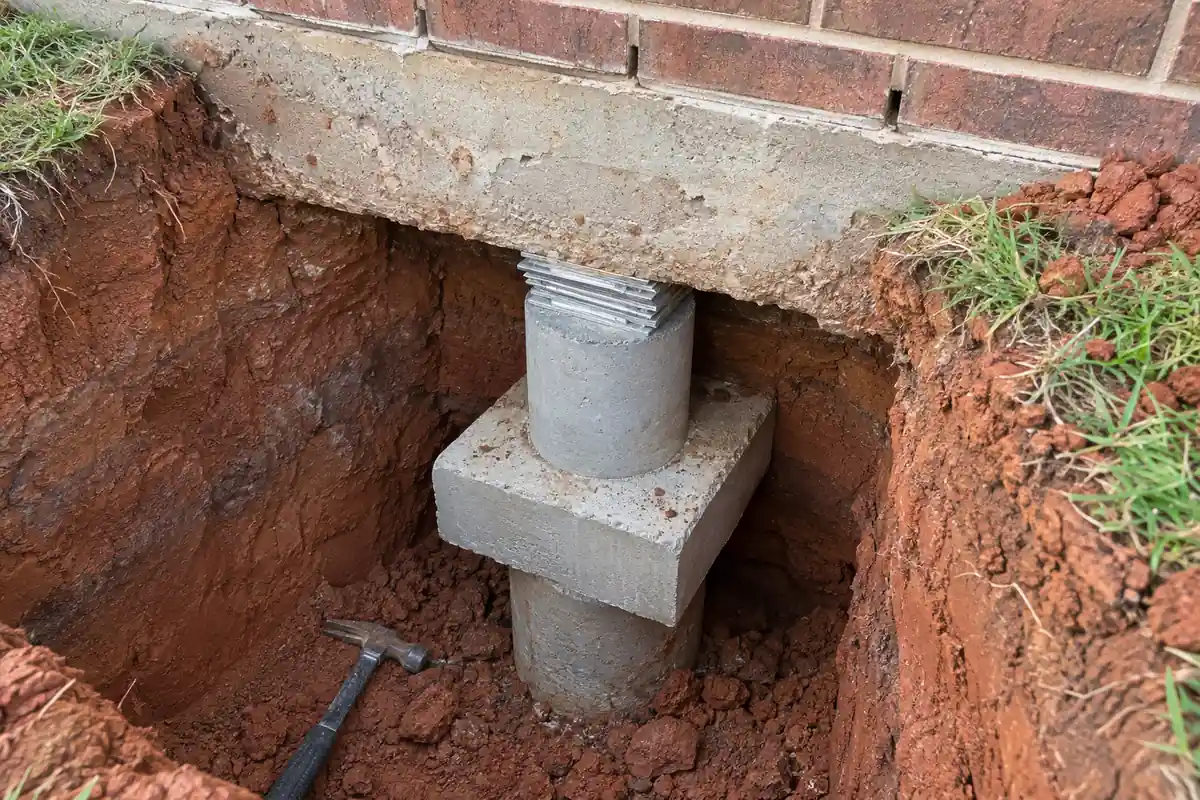
Four commitments come in writing on every steel pier job. You get a free on-site inspection first, then a written itemized quote broken into separate lines.
We set a scheduling window up front, and the warranty terms are written down too, transfer language included. That means you read what passes to the next owner, what a transfer costs and what voids it. Either way, Wichita Falls and Wichita County get the same paperwork.
Signs a heavier corner has dropped
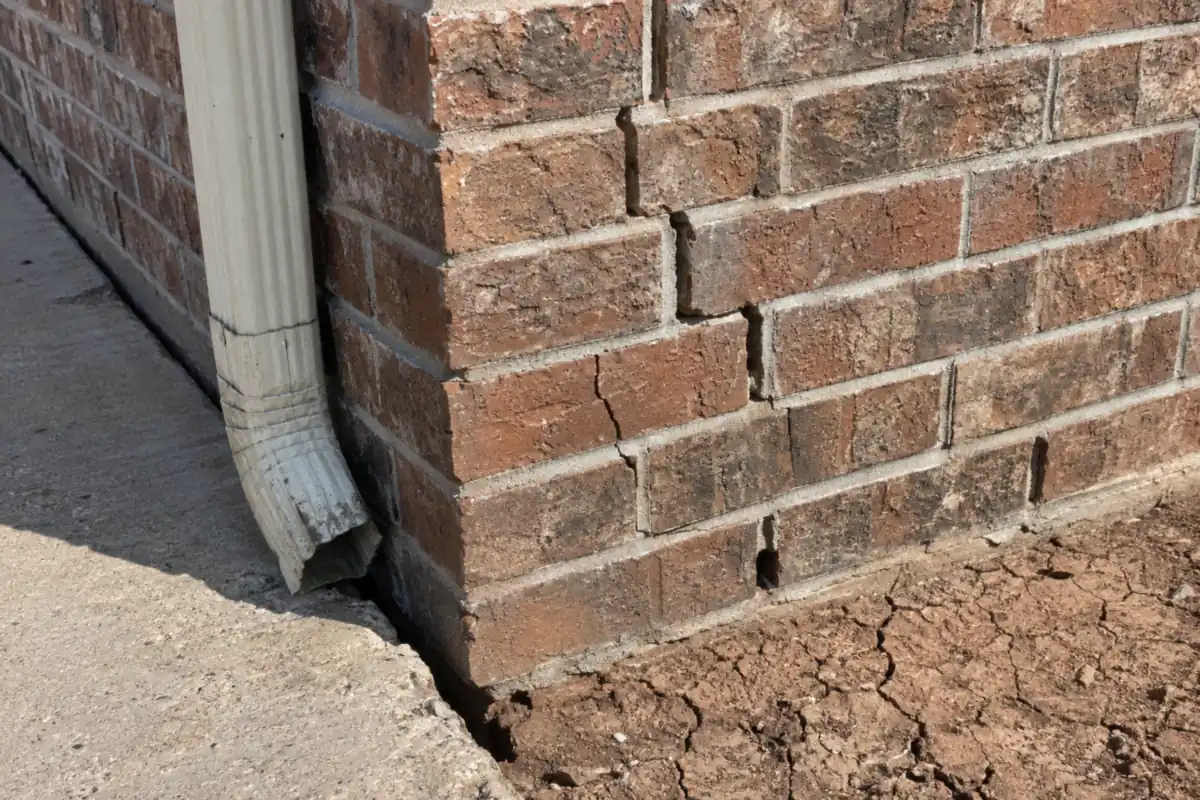
A crack that splits the brick itself usually means more load is coming down than a lighter pile was meant to carry.
- A crack running through the brick itself rather than the mortar joint.
- A corner of brick veneer rotated or bulging out of plane.
- A chimney leaning away from the wall, the old caulking line showing how far.
- Windows that bind on an upper floor while the ones below still work.
- Cracks that opened again a year or two after somebody else set piers.
- A floor that falls away underfoot toward one outside wall.
Brick veneer carries no load itself. It is a skin hung on the foundation, so it has to crack somewhere once that foundation drops. If one of these is on your house, we'll come out and tell you what it means.
What Wichita Falls homeowners get from Wichita Falls Foundation Works
Steel earns its extra cost when refusal sits deeper than a concrete stack reaches, or the corner carries more load than pressed cylinders suit. Paying for the material name alone, with no depth or load behind it, is the mistake.
Read an estimate as a refusal target and a pier count before you read the brand of pier on it. The City of Wichita Falls licenses and registers contractors and requires a permit before repair or alteration work starts; ask to see both, along with proof of general liability insurance, the written warranty with transfer terms, and whether an engineer's report is included or billed separately.
Every pier should be field load tested before the house comes up; ask to see the readings. During the lift, one of our crew stays inside, watching your doors and the floor readings.
Steel push piers compared with pressed pilings and helical piers
Steel push piers. These get driven to refusal and load tested pier by pier, which is what a deep refusal or a heavy corner calls for.
Pressed concrete pilings. These cost less per unit and get pressed in, and the same refusal reading stops them, though no load test stands behind them.
Helical piers. These turn to torque, so they still hold where there is no house weight to work against at all.
How the job runs, elevation survey to load test
- Free on-site inspection and elevation survey: our estimator reads inside and out, then leaves you a written estimate with a floor plan marking every pier.
- Setup: utility locates, your sprinklers off, cars off the drive, plywood down, tarps ready for spoil.
- Excavation: we hand-dig a hole about three feet square at the foundation, cut back so the footing face is reachable.
- Bracket: the footing notched where required and chipped smooth, then a galvanized bracket bolted flat to it.
- Drive: a stand and cylinder clamped to the bracket push 3-1/2 foot pipe sections in one at a time, gauge read through the drive.
- Load test and lift: every pier field load tested, then hydraulics at each bracket bring the house up in sections while one of our crew reads elevations inside.
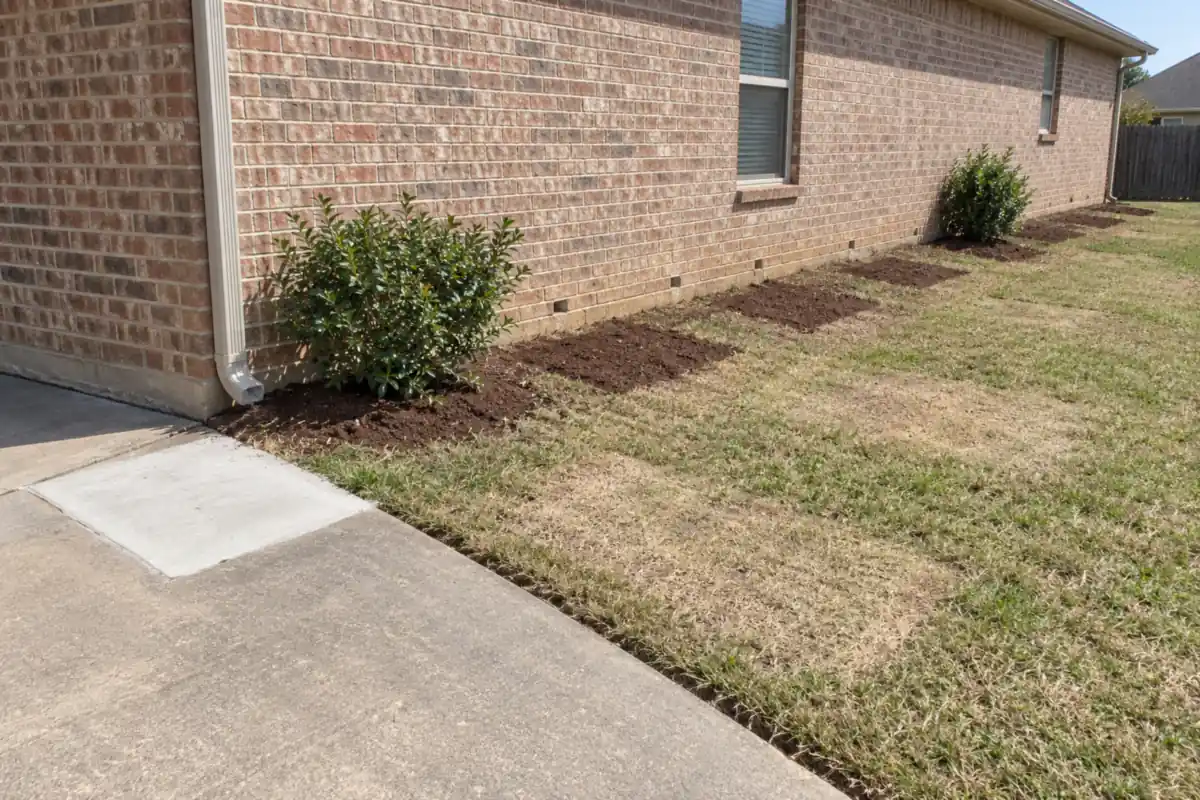
- Secure, backfill, clean: nuts set at the pier cap, holes tamped with select fill, broken flatwork patched, and we haul the spoil away.
Why depth to stable ground changes street to street in Wichita Falls
A spatial query of USDA soil survey data across the city returns Kamay, Tillman, Bluegrove, Winters, Waurika, Renfrow and a dozen other series under one city. Waurika's clay runs 52 percent clay with a plasticity index of 38, very high shrink-swell. Renfrow's subsoil sits at 45 percent clay, PI 32, which NRCS still classes as high, not moderate.
The US Drought Monitor logged extreme drought or worse across part of Wichita County in 42 weeks of 2011, 44 of 2012, 53 of 2013, 52 of 2014 and 19 of 2015 (county records as of September 20, 2026). That kind of swing dries clay back hard, then floods it. So we never promise you a depth ahead of the drive. Our crew finds it on the gauge, house by house.
How much do steel piers cost in Wichita Falls?
Steel runs $500 to $1,500 per pier installed, and a typical job takes 8 to 15 of them. Depth before refusal, single-wall against double-wall pipe and the bracket type move your number inside that band.
An interior pier through the slab adds $125 to $175 on top of the per-pier price, covered in full on interior piers and tunneling. Call (940) 202-0406 and we'll come read your floors, then turn those ranges into one written number.
| Work | Typical range | Notes |
|---|---|---|
| Steel push piers (pressed steel piles) | $500 to $1,500 per pier installed | 8 to 15 piers on a typical job. Depth before refusal, single-wall against double-wall pipe and the bracket type move the number. |
| Interior pier set through the slab (added to the exterior pier price) | $125 to $175 per interior pier | The surcharge for breaking and patching the slab, on top of the per-pier price. It is not the pier itself. |
Swipe the table sideways to see the notes column.
Typical quotes for Wichita County. The on-site inspection and the elevation survey cost you nothing.
Steel pier work across Wichita County
Steel pier work runs across the county, listed on our service areas page. Our crews drive to Iowa Park, Henrietta and Lakeside City on the same terms as a Wichita Falls address.
What happens when you call
The inspection
A free on-site inspection comes first. We come to the property, look at the work in person, measure, and check the things that change the price before quoting anything.
A written, itemized quote
Every line item goes on paper before any work starts: prep, materials, labor, cleanup and the scheduling window. No verbal numbers.
Warranty terms in the contract
Workmanship and material warranty terms come in writing and go in your contract so you can read them before you sign.
Scheduling you can plan around
You get a start window and a working-day estimate up front, and the crew tells you before anything changes.
Who this is not for
Wichita Falls Foundation Works handles foundation repair and the related work listed on this site. It does not take on unrelated trades; if your job is outside that scope, a specialist in that trade is the right call.
Steel push pier questions from Wichita Falls homeowners
What is a steel push pier, and when does a house need one instead of concrete?
A steel push pier is galvanized pipe driven in 3-1/2 foot sections through a bracket bolted to the footing. It earns its place where refusal sits deeper than a concrete stack reaches, or the corner being lifted carries more load than pressed cylinders suit. See how a pressed concrete pile differs.
What is the per-pier price on a steel job?
Steel runs $500 to $1,500 per pier installed, with 8 to 15 piers on a typical job. Depth before refusal, single-wall against double-wall pipe and the bracket type move your number inside that band. We put the count and the per-pier price on the quote before anyone digs.
What does the bracket at the bottom actually bolt to?
The bracket bolts to the concrete footing or stem wall under the grade beam. We notch it where required and chip it smooth and level first, so the galvanized bracket sits flat, with the pipe running down through it and the nuts secured at the pier cap.
Is steel worth the extra money over pressed concrete cylinders?
Sometimes. Steel earns the difference when the soil, the depth to refusal or the load says so, and a pressed pile that reaches the same stable clay does the job for less. Ask for the refusal target and the pile count on both quotes before you pay for a material name.
Does a steel pier job take longer than a concrete pile job?
No, not materially. Both run one to three days on a typical exterior slab job, going by the timelines North Texas repair companies publish. What stretches a schedule is interior access, tunneling or rain, and we'll tell you which of those we expect on your house before the crew books the date.
Why are steel pier quotes here lower than the numbers on Dallas-Fort Worth websites?
Who is quoting is itself a price factor. Small-city crews price near the bottom of the $500 to $1,500 band, and DFW guides sit near the top. So read a Wichita Falls quote against Wichita Falls numbers, and treat a metro figure as somebody else's market.
Steel is not the default pier here, and it should not be. It is the right answer when depth or load says a lighter pile will not hold, and a waste of money when a pressed pile would reach the same clay. Call (940) 202-0406 and we'll read your floors for nothing, then tell you which one your house actually needs.
Get a written quote
Call (940) 202-0406 or send the form. The next step is a free on-site inspection and a written quote with every line item before any work starts.
Call (940) 202-0406