
Root Barrier Installation in Wichita Falls, TX: Put a Line Between the Tree and the Clay Under Your Slab
A trench and a vertical barrier between a thirsty tree and your foundation, priced by the linear foot after we walk the line with you.
- Free on-site inspection
- Priced by the linear foot
- Written itemized quote
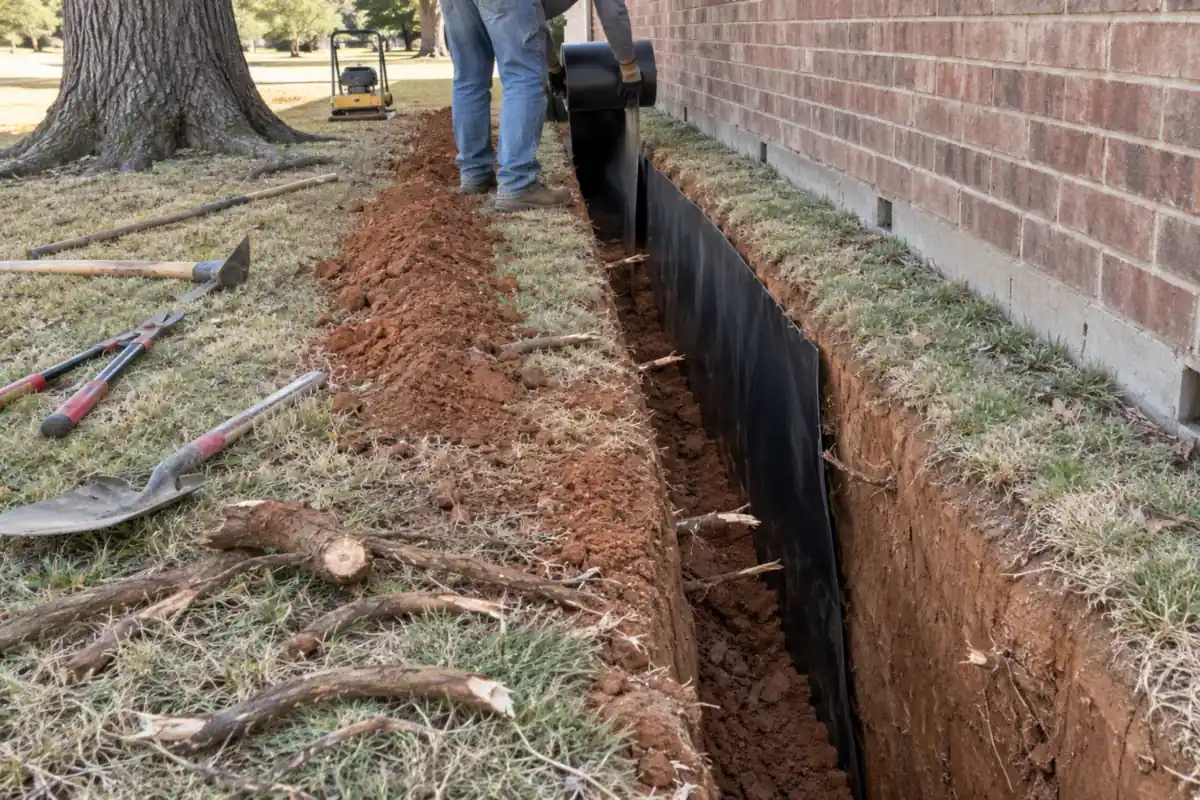
Wichita Falls Foundation Works trenches and sets root barriers between trees and slabs across Wichita Falls and Wichita County, priced by the linear foot rather than a guess at your curb. A tree pulls moisture out of the clay near it, that clay shrinks, and the nearest corner of the house follows it down. Call (940) 202-0406 and we will walk the trench line with you on the free on-site inspection, before a number gets written.
The written quote we hand you says plainly what it costs to bore under a drive instead of cutting through it.
What a root barrier installation includes
A root barrier is a trench cut between the tree and the foundation, with a vertical barrier set into it so roots get steered down and away rather than under the grade beam.
The trench crosses whatever your lot puts in its path. We bore under drives and walks or cut and patch them, and we locate irrigation lines and utilities before anyone digs. The tree itself may still want pruning or removal, and that call, and that bill, belongs to an arborist.
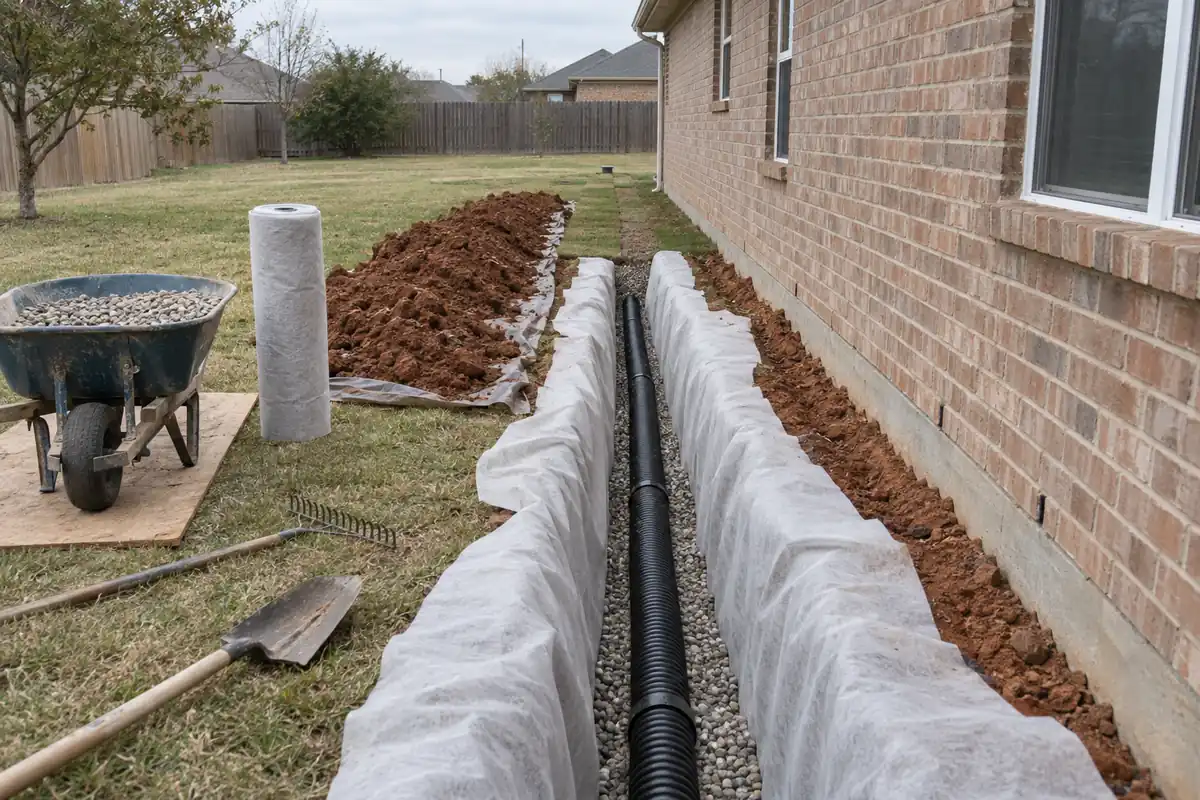
What you get in writing
The on-site inspection costs you nothing. Our written itemized quote gives linear feet, depth and a separate line for every drive, walk or bed the trench has to cross. Warranty terms go in writing too, with the transfer terms spelled out. We quote the scheduling window up front, across Wichita Falls and Wichita County alike.
Signs a tree is pulling on the slab, as Wichita Falls homeowners describe them
A tree close to the house rarely gets blamed first. The house does.
- Doors that stick or will not latch
- Cracked sheetrock at the corners of a door or window frame
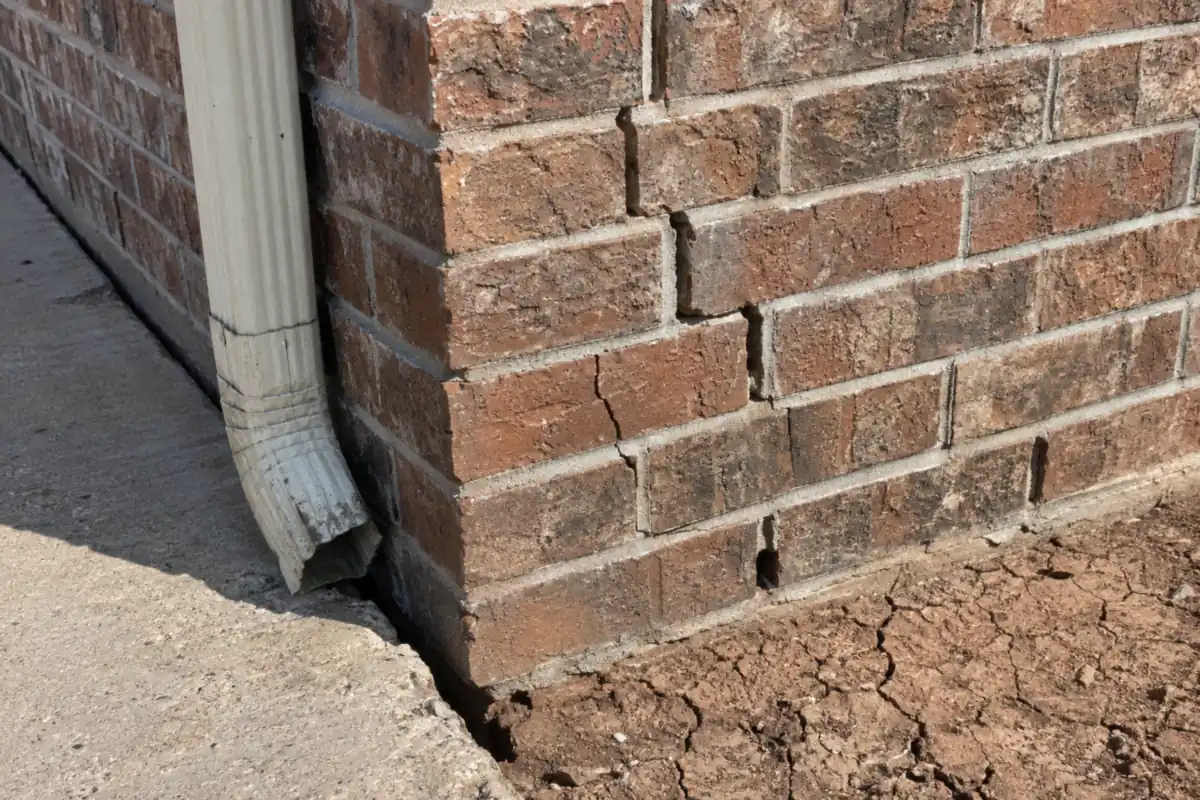
- Stair-step cracks climbing the brick mortar
- Nail pops and tape seams showing through the paint
- A gap opening between the baseboard and the floor
- Floors that slope, or a hallway that feels higher in the middle
- Cracked tile with the grout lines pulling apart
- A chimney easing away from the wall
Where every one of those clusters on the side of the house nearest a big tree, the elevation survey we run is how you confirm what the yard already suggests.
What Wichita Falls homeowners get from Wichita Falls Foundation Works
A barrier earns its place before a house has moved, or as protection after piers have already fixed it. On a house that has already dropped, we quote the lift as its own separate job, and the barrier is what keeps the tree from causing a repeat.
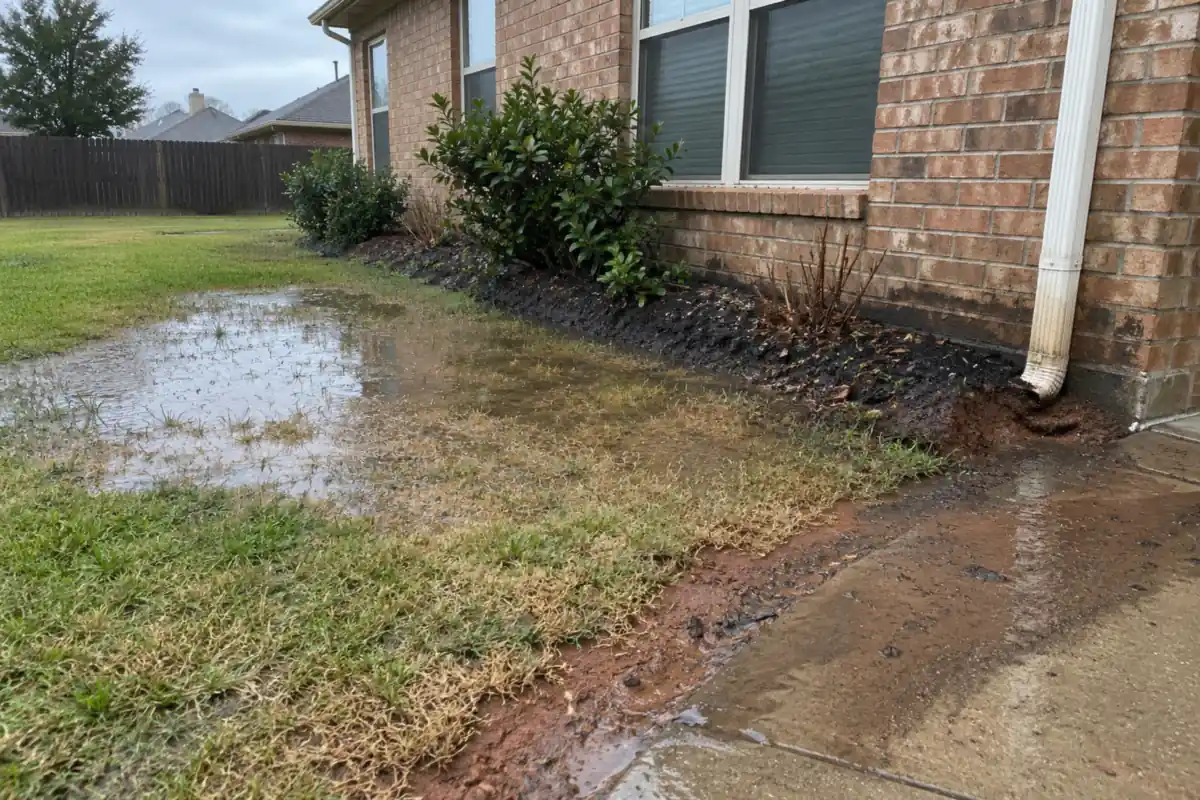
We set depth and length on site rather than off a chart, which is why we quote this work by the linear foot with a stated job minimum. A barrier answers a tree pulling moisture out of the clay. It will not answer surface water at the wall, and it will not answer a leaking drain line under the slab.
Texas licenses no foundation repair contractor, per TDLR's program list. The City of Wichita Falls licenses and registers contractors and requires a permit before repair or alteration work starts; ask to see both, along with proof of general liability insurance, a written warranty with its transfer terms spelled out, and whether an engineer's report from a Texas professional engineer is included in the price or billed separately.
Root barrier, drainage correction and soil moisture compared
Root barrier against watering. A barrier stops a tree taking moisture out of the clay. A soaker hose replaces moisture that leaves the clay for other reasons. We cover the watering side under foundation maintenance.
One tree against two or three. Screening one tree is a short run; running the barrier past two or three trees along one wall is a longer one, and we price both by the same linear foot.
Boring against cutting. We either bore under a drive or a walk in the trench line or cut and patch it, and you see that choice as a line on the quote before we start.
Alone against alongside a pier job. Setting a barrier while our pier crew already has the yard open costs less than a separate mobilization, the same logic that runs through drainage correction and grading.
How the job runs, walking the line to sod back down
- The free on-site inspection walks the trench line with you and marks what it crosses, and you get the scheduling window on the same visit.
- We call in 811 locates, and irrigation lines get marked before anyone digs.
- Our written itemized quote gives linear feet, depth, and a separate line for every drive, walk or bed in the way.
- We cut the trench between the tree and the foundation.
- We set the barrier vertically and backfill it.
- We put sod and beds back, and the line stays visible across your yard for a season.
Why North Texas clay, water and weather move foundations
The Texas Oak Wilt Partnership's recommended tree list for this part of Texas names pecan, post oak, escarpment live oak and bur oak among the species that grow here, and USDA soil series descriptions record mesquite in the vegetation on Kamay and Tillman soils. Kamay is the soil most often mapped under the developed city, and its clay subsoil carries a plasticity index of 29 and a linear extensibility of 7.5 percent, which NRCS classes as high shrink-swell.
On NOAA's 1991-2020 climate normals, rainfall peaks at 3.81 inches in May and drops to 2.02 in July before climbing again toward fall. Drought has hit hard here before: US Drought Monitor maps (as of September 20, 2026) show extreme drought or worse covering part of Wichita County in 42 weeks of 2011, 44 of 2012, 53 of 2013, 52 of 2014 and 19 of 2015. A tree competing with a house for moisture in clay that swings that hard is exactly the setup we build a root barrier to interrupt.
How much does a root barrier cost in Wichita Falls?
A root barrier runs $65 to $75 per linear foot installed, and most jobs carry a minimum of about $1,400. A typical 20 to 40 foot run in front of one or two trees lands at $1,400 to $3,000.
What moves your number is linear feet and barrier depth, trenching through roots already under the beam, a drive, patio or walk in the trench line, irrigation lines and utilities crossed, how hard the clay runs when it is dry, how many trees get screened, and sod and bed restoration. Call (940) 202-0406 and we will walk the exact line with you first.
| Work | Typical range | Notes |
|---|---|---|
| Root barrier, trenched and installed | $65 to $75 per linear foot | Most jobs carry a minimum of about $1,400 |
| Typical 20 to 40 ft run | $1,400 to $3,000 per run | In front of one or two trees, the commonest scope on a house |
| Drainage correction, added to the same job | $1,100 to $8,000 per job | Where surface water is the other half of the problem |
Swipe the table sideways to see the notes column.
Published market ranges dated 2026-09-20. Every job is priced after a free on-site inspection.
Root barrier work across Wichita County
Service area work reaches Iowa Park, roughly 11 to 13 miles out US 287, Holliday, about 14.8 miles down US 277 and US 82, and Bowie, about 46.7 miles out US 287. We measure trees and trench lines on site in every one of them, the same as inside Wichita Falls.
What happens when you call
The inspection
A free on-site inspection comes first. We come to the property, look at the work in person, measure, and check the things that change the price before quoting anything.
A written, itemized quote
Every line item goes on paper before any work starts: prep, materials, labor, cleanup and the scheduling window. No verbal numbers.
Warranty terms in the contract
Workmanship and material warranty terms come in writing and go in your contract so you can read them before you sign.
Scheduling you can plan around
You get a start window and a working-day estimate up front, and the crew tells you before anything changes.
Who this is not for
Wichita Falls Foundation Works handles foundation repair and the related work listed on this site. It does not take on unrelated trades; if your job is outside that scope, a specialist in that trade is the right call.
Root barrier questions from Wichita Falls homeowners
How does a tree pull one corner of the house down?
Roots take moisture out of the clay near them, that clay shrinks, and the nearest corner of the foundation follows it down. No source gives a root-influence distance for Wichita Falls, so we start with the tree nearest the problem corner rather than pacing out a radius.
Which trees around here are the ones that matter?
The recommended species list for this part of Texas names pecan, post oak, escarpment live oak and bur oak, and the soil survey records mesquite in the vegetation of Kamay and Tillman soils. We can name the species. No source ranks which of them pulls hardest on a slab, so we look at where the tree actually stands.
What does a root barrier run per foot?
$65 to $75 per linear foot installed, with a job minimum of about $1,400. A typical 20 to 40 foot run in front of one or two trees lands at $1,400 to $3,000. We measure the run on site before we price it.
Will the barrier kill the tree?
No source supports a yes or a no. What we can tell you is that the trench cuts the roots on the house side of the line. Pruning or removal is an arborist's call and an arborist's bill, not ours.
Where exactly does the barrier go and how deep?
In a trench between the tree and the foundation. We set linear feet and depth on site and price them by the foot. Drives, walks, irrigation lines and utilities in the trench line get bored under or cut and patched.
Is a barrier any use once roots are already under the slab?
It stops what comes next rather than undoing what already happened. Trenching through roots already under the beam is itself a price factor. On a house that has already dropped, the lift is a separate line and we put the pile side of the job first.
A tree does not apologize for what its roots are doing under your slab, and a barrier will not undo a drop that already happened. Get the trench line walked before you decide anything. Call (940) 202-0406 and tell us which tree stands closest to the worst crack. We'll walk the line with you.
Get a written quote
Call (940) 202-0406 or send the form. The next step is a free on-site inspection and a written quote with every line item before any work starts.
Call (940) 202-0406