
Foam Injection and Slab Leveling in Wichita Falls, TX: A Sunken Panel Lifted Back Onto Solid Ground
Your sunken driveway, walk or patio gets lifted with polyurethane foam or a cement slurry, and we price it after a free on-site inspection.
- Free on-site inspection
- Usable about 20 minutes after
- Written itemized quote
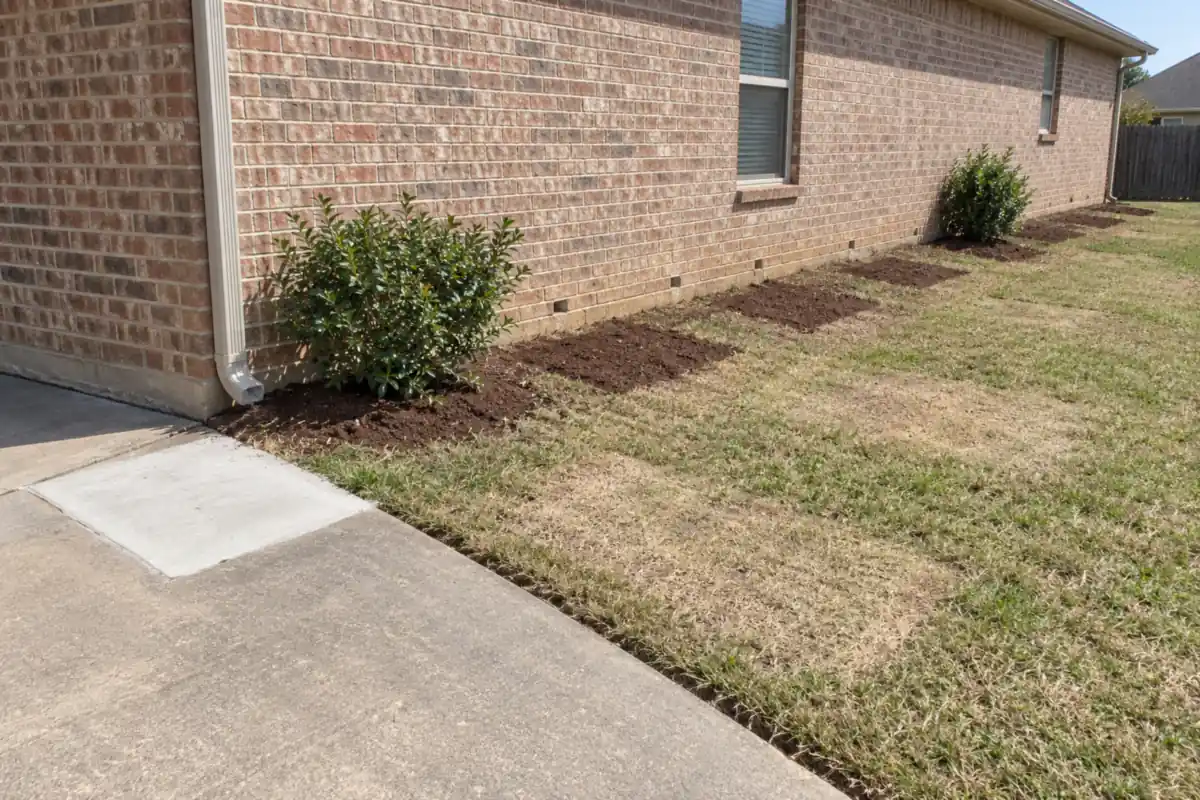
Wichita Falls Foundation Works lifts sunken driveways, walks, patios and interior slab panels across Wichita Falls and Wichita County with polyurethane foam or a cement slurry. Which material fits your panel, and whether it is even a candidate, comes out of a free on-site inspection. Call (940) 202-0406 and our estimator will come read the panel in person. Nobody here prices flatwork off a photo.
A written itemized quote follows, naming the material, the section and the hole count. This page is for concrete that dropped; a settled house perimeter is a different job on a different page.
What a slab leveling job includes
A foam injection slab leveling job starts with elevation readings across the sunk panel and the panels beside it, because the height difference tells our estimator whether foam is even the right tool. Once we know what made the void, a written itemized quote names the material, the section and the hole count before anything gets drilled.
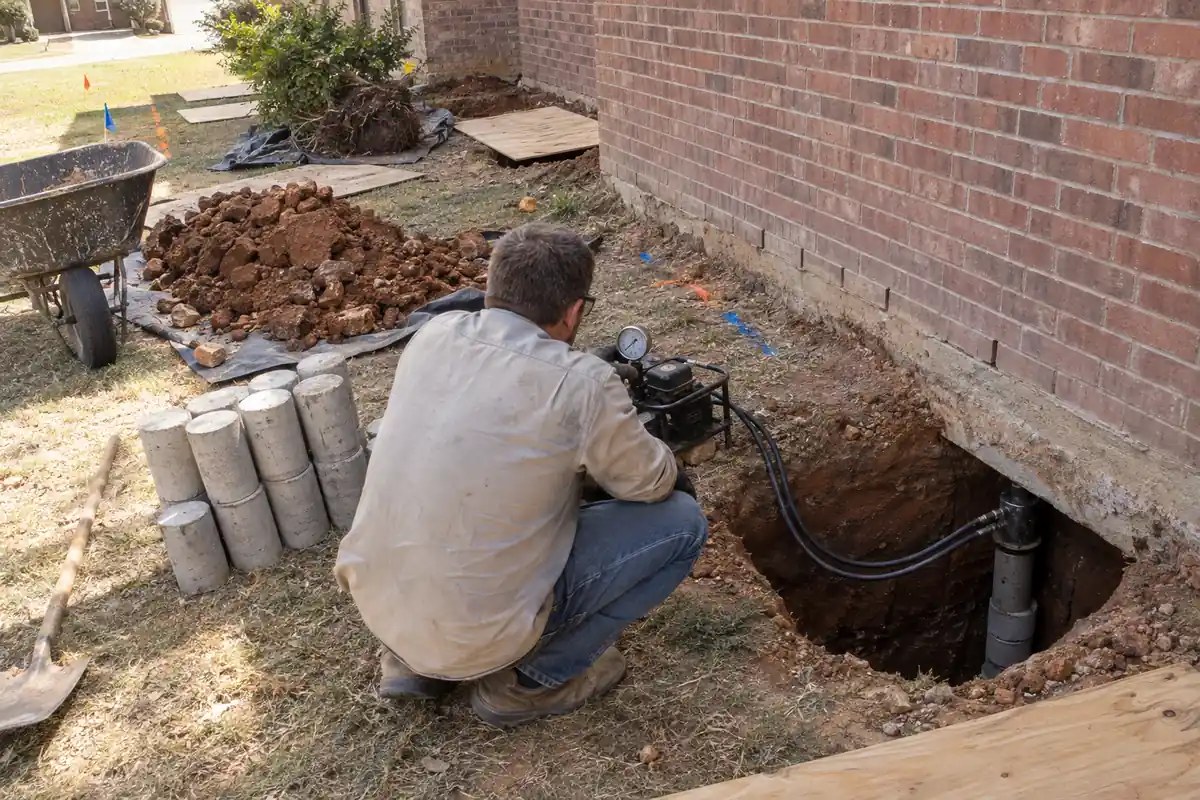
For polyurethane lifting we drill a series of 5/8 inch holes, each slightly smaller than a dime, set injection ports, and shoot foam from a hand-held gun fed by a rig parked at the curb. We pull the ports, patch the holes with cement, and the rig digs nothing and brings no bags. Mudjacking runs a hose from a mixer or pump, feeding a slurry of mud and cement under the slab at low pressure.
Neither method underpins a house that is still moving, and neither touches whatever made the void. That distinction is the whole subject of slab foundation repair.
What you get in writing before anything is pumped
You get a free on-site inspection first, then a written itemized quote naming the section, the material and the price. Warranty terms come in writing too, transfer terms spelled out.
That means you read what passes to the next owner, what a transfer costs and what voids it. We quote the scheduling window up front, and our crew serves Wichita Falls and Wichita County on the same terms.
Sunken concrete Wichita Falls homeowners call about
- A driveway panel or apron that has dropped, leaving a lip at the garage door
- A patio or walk that now ponds water instead of shedding it
- A hollow sound when you tap a panel with a hammer handle
- A trip edge where two panels meet
- A garage floor that has settled away from the wall
- A porch or stoop sitting low against the brick
Every one of these shares the same mechanism. The panel on top is sound and the ground under it has gone. A house slab that is still moving is a different problem, and it needs piles down to stable soil.
We'll tell you which of the two you have before anyone quotes you a price.
What Wichita Falls homeowners get from Wichita Falls Foundation Works
One test decides whether foam belongs on your job. A section sitting still on a void is a candidate. A house that is still moving needs piles, and telling you which one you have is the point of the free inspection.
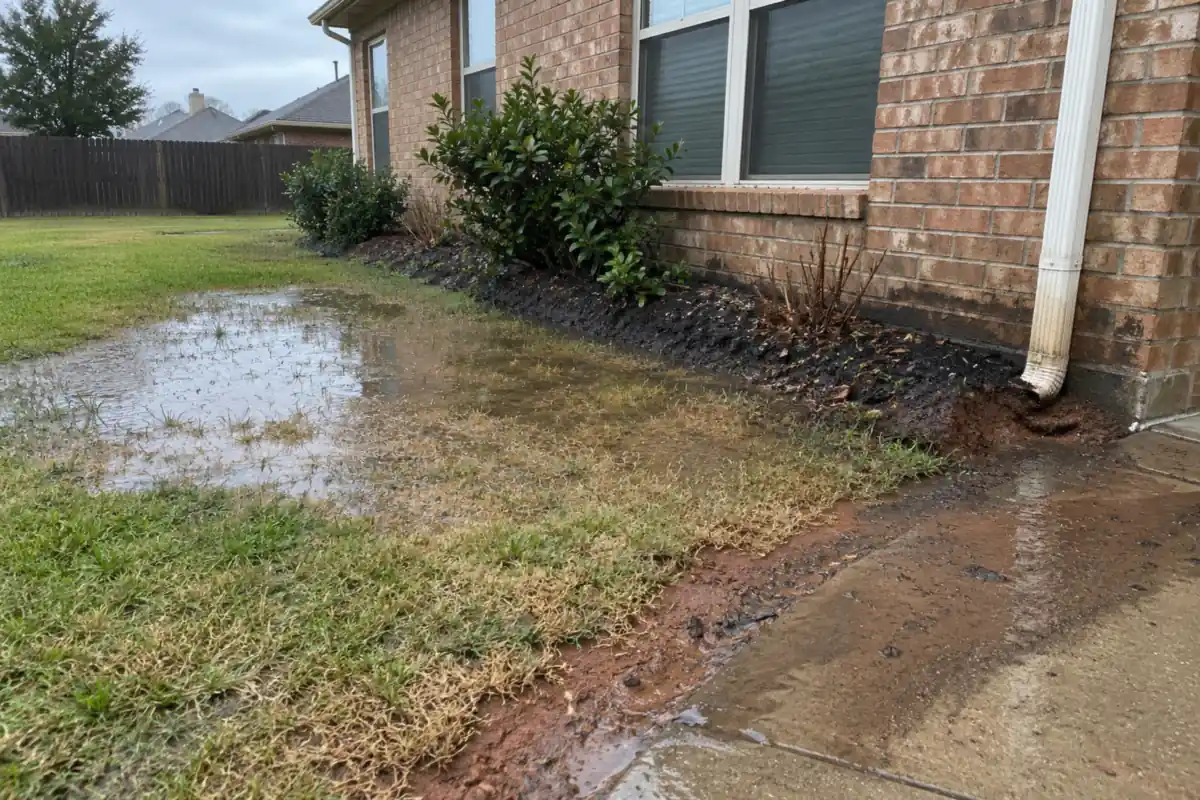
If water under the slab made the void, the fill washes straight back out, so we fix the leak or the drainage first. We decide between mudjacking and polyurethane foam at the panel, on slurry weight, hole size and cure time.
Texas does not license foundation repair contractors (the state licensing agency, TDLR, lists none). The City of Wichita Falls licenses and registers contractors and requires a permit before repair or alteration work starts; ask to see both, along with proof of general liability insurance, the written warranty with its transfer terms, and whether an engineer's report is included or billed separately.
Polyurethane foam compared with mudjacking, and both compared with piles
Mudjacking. This pumps a heavier cement slurry through larger holes at about $3 to $6 per square foot, and the cure runs longer before the surface takes weight.
Polyurethane foam. This one is lighter, we inject it through 5/8 inch holes, and it sets in minutes at about $5 to $10 per square foot.
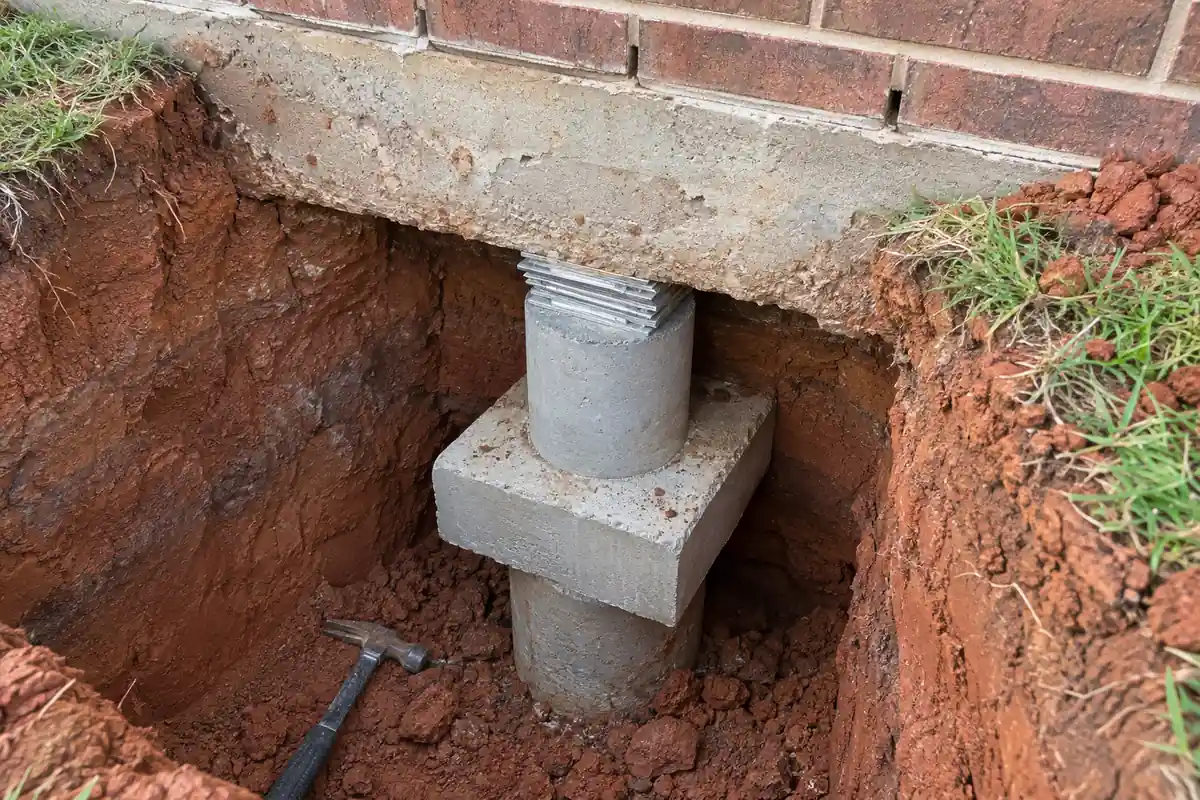
Neither one is underpinning. A slab still moving needs pressed concrete pilings, and a crack that keeps opening belongs on foundation crack repair. Where water keeps finding its way under the panel from outside, drainage correction and grading is what keeps a lift where it landed.
How the job runs, elevation readings to patched holes
- Free on-site inspection: our estimator takes elevation readings across the panel and the panels around it, and looks at where water goes when it rains.
- The cause question: if a leak is suspected, a plumber's hydrostatic test on the under-slab drain line comes before anything is pumped.
- A written itemized quote naming the material, the section and the number of holes, in your hands before we book a date.
- Holes and ports: a series of 5/8 inch holes drilled, injection ports set.
- The lift: foam shot from a hand-held gun fed from the rig on the truck, or slurry pumped at low pressure, while we watch the panel itself come up.
- Ports pulled, holes patched with cement, and we clean the surface down.
Why water gets under Wichita Falls flatwork in the first place
In USDA soil survey data for Wichita County, the soils under the built-up city are mostly gentle, Kamay running 0 to 3 percent slope, Deandale the same, with the steep ground confined to Latom-Urban land at 5 to 20 percent. Nearly flat ground is the normal condition here. NRCS records Kamay as well drained with slow permeability and Hollister as well drained with very slow permeability and high to very high runoff. Slow-draining clay on a nearly flat lot sheds rain rather than absorbing it, washing fines out from under a slab edge over time.
The rain itself swings hard across a year: NOAA's 1991-2020 climate normals put May at 3.81 inches, dropping to 2.02 inches by July. Ground a downpour runs across in May has shrunk back by midsummer, and that swing is what our estimator looks for at the panel edge, not a claim about any particular yard.
How much does slab leveling cost in Wichita Falls?
Most lifted sections run $800 to $3,000, set by square footage, how far the panel has dropped, the number of injection holes and whether the work is interior slab or exterior flatwork. Mudjacking runs about $3 to $6 per square foot in this market and polyurethane foam about $5 to $10. Call (940) 202-0406 and we'll come look at your panel for nothing before you decide which one you need.
| Work | Typical range | Notes |
|---|---|---|
| Slab leveling and polyurethane foam injection | $800 to $3,000 per lifted section | About $3 to $6 per sq ft for mudjacking and $5 to $10 per sq ft for polyurethane foam in this market. |
| Hydrostatic plumbing test | $250 to $600 per test | A plumber's bill, not ours, run where a leak is suspected of having made the void. |
Swipe the table sideways to see the notes column.
Typical quotes for Wichita County. Every job is priced after a free on-site inspection and an elevation survey.
Slab leveling across Wichita County
Sunken flatwork gets leveled the same way across our service areas in Wichita County, and our crews go out to Holliday, Lakeside City and Bowie. The estimate is free wherever your panel sits.
What happens when you call
The inspection
A free on-site inspection comes first. We come to the property, look at the work in person, measure, and check the things that change the price before quoting anything.
A written, itemized quote
Every line item goes on paper before any work starts: prep, materials, labor, cleanup and the scheduling window. No verbal numbers.
Warranty terms in the contract
Workmanship and material warranty terms come in writing and go in your contract so you can read them before you sign.
Scheduling you can plan around
You get a start window and a working-day estimate up front, and the crew tells you before anything changes.
Who this is not for
Wichita Falls Foundation Works handles foundation repair and the related work listed on this site. It does not take on unrelated trades; if your job is outside that scope, a specialist in that trade is the right call.
Foam injection and slab leveling questions from Wichita Falls homeowners
What can polyurethane foam lift, and what can it not?
Foam lifts a sunken slab section sitting on a void, so a driveway, a walk, a patio or an interior slab panel. It cannot underpin a house that is still moving, which needs piles down to stable soil. Telling which one you have is exactly what our elevation readings are for.
What does foam injection cost?
$800 to $3,000 per lifted section. Square footage, how far it has dropped, the number of injection holes and whether it is interior slab or exterior flatwork set the number inside that band. We put the section and the hole count on the written quote.
How is foam different from mudjacking?
Mudjacking pumps a heavier cement slurry through larger holes at about $3 to $6 per square foot in this market. Polyurethane foam runs about $5 to $10 and sets in minutes, where a slurry needs hours. We pick between them at your panel.
How soon can I drive or walk on it?
The lift itself can take as little as two hours on a small section, and the surface is usable roughly twenty minutes after the injection. That is the one genuine speed advantage this method has over anything else on this site.
There is a hollow under my driveway, so is that a plumbing leak?
It can be, and if it is, the leak gets fixed before we pump anything into the void, or the water washes the fill straight back out. A hydrostatic plumbing test on the under-slab drain line at $250 to $600 is how that question gets answered, and it is a plumber's bill.
Will the section stay where the foam put it?
The fill is permanent for the void it fills, and it does nothing about the reason the void appeared. If water running under the slab or clay shrinking below it made the gap, drainage and moisture work is what keeps the section in place afterward.
A panel that sounds hollow when you tap it is sitting on a void, and the question worth asking is what put the void there. Foam and slurry are fast, honest tools for a section that has stopped moving on its own. For a house still settling they are the wrong tool, and we'll say so. Call (940) 202-0406 and we'll come look for free before you decide which one you need.
Get a written quote
Call (940) 202-0406 or send the form. The next step is a free on-site inspection and a written quote with every line item before any work starts.
Call (940) 202-0406